Bliss Business College: Training for a Modern Economy
At the beginning of the twentieth century, Bliss Business College stood as a symbol of aspiration and opportunity in the center of downtown North Adams. It was more than just a school; it represented the expanding significance of business education in an industrializing America and gave local students a useful route into the workforce.
Text
In the middle of the 1890s, when the city's mills, banks, and commercial enterprises were growing quickly, Bliss Business College was established in North Adams. The college had already made a name for itself in the city's economic and educational scene, as evidenced by the first reference to it in the North Adams Transcript in December 1896. Since its founding, the institution was closely associated with the local economy, preparing students for office and clerical work in a city that is becoming more and more influenced by business and industry.
Bliss Business College was situated in the heart of North Adams' business sector and took up an entire floor of the Adams National Bank building. The school's practical goal of teaching students about the day-to-day operations of contemporary business rather than abstract theory was strengthened by its urban surroundings. This goal was mirrored in the college's curriculum. Bliss Business College focused on accountancy, shorthand, typewriting, penmanship, and office operations rather than providing a traditional education. In the late nineteenth century, when companies relied more and more on written records, effective correspondence, and well-organized financial administration, these were crucial abilities.
The college was commended in a promotional piece in Vicinity Illustrated for training students in "a variety of subjects" in addition to bookkeeping, with the goal of producing intelligent and competent businesspeople. The institution guaranteed upward mobility through practical education, particularly for students who lacked the resources to pursue more conventional types of higher education outside the area.
Early in the college's history, ownership changed hands. The college was sold to E. J. Shaw in February 1896, according to the North Adams Transcript, which signaled the start of Shaw's administration and the period most closely linked to the institution's expansion. Shaw became Bliss Business College's public face, and his image in marketing materials portrays him as polished, respectable, and a symbol of the professional values the institution aimed to foster.
The college's standing as a hub for business education in western Massachusetts grew under Shaw. However, Shaw's leadership came to an end by the close of the decade. According to a farewell story, students gave a gold-headed cane to the "former proprietor, E. J. Shaw" before he left North Adams, and Sherman McVeigh became the new owner. Later, McVeigh's picture was published in the Bliss Business College Journal, solidifying his position as Shaw's replacement and the college's new owner. This change connected the institution's early years under Shaw to its subsequent growth under McVeigh, marking a watershed in its history.
Shaw pursued various career prospects after graduating from Bliss Business College. He went on to occupy a responsible post in New York City, according to a 1905 North Adams Transcript article, indicating that his own career followed the same path of commercial mobility and promotion that the college fostered in its pupils. Shaw left North Adams, but his influence on the school's early reputation was crucial to its legacy.
Bliss Business College served students in North Adams well into the 20th century, not closing until December 20, 1956. However, its influence persisted long after. Bliss College left a lasting impression on the community, as evidenced by a 1993 North Adams Transcript article mentioning a former student. Bliss Business College contributed significantly to the contemporary education and economic opportunities in North Adams with its hands-on curriculum, its urban setting, and focus on disciplined professional training.
Files
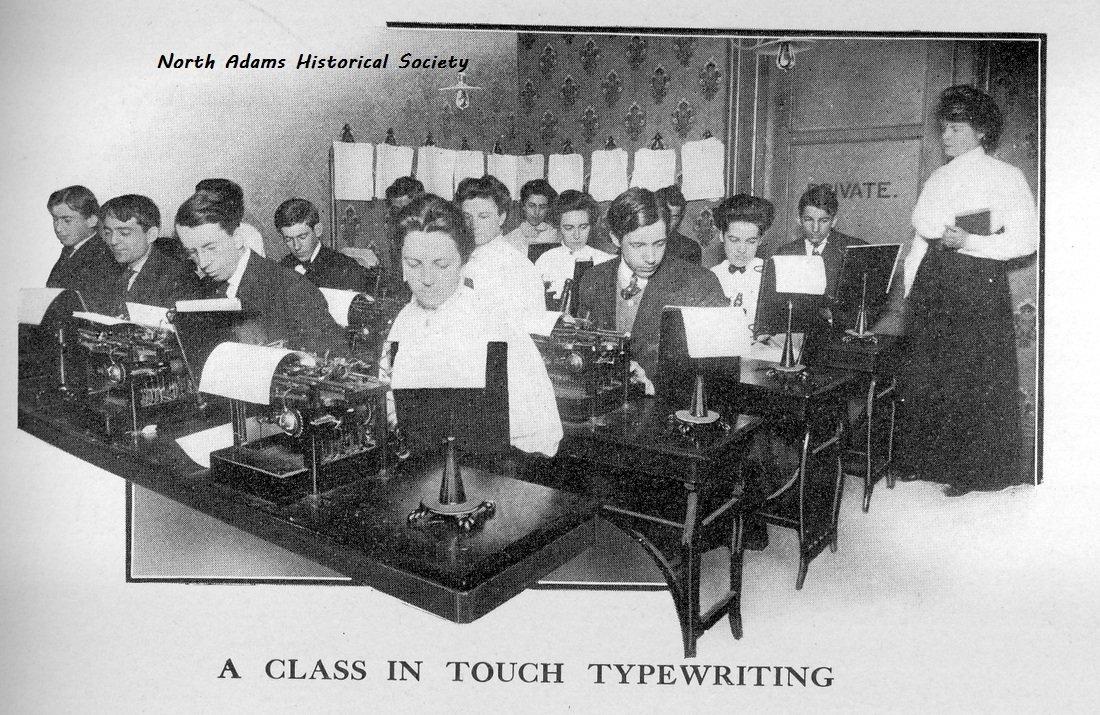
Classes at Bliss Business College.
An advertisement for the touch-typing class offered at Bliss Business College. | Source: Courtesy of the North Adams Historical Society.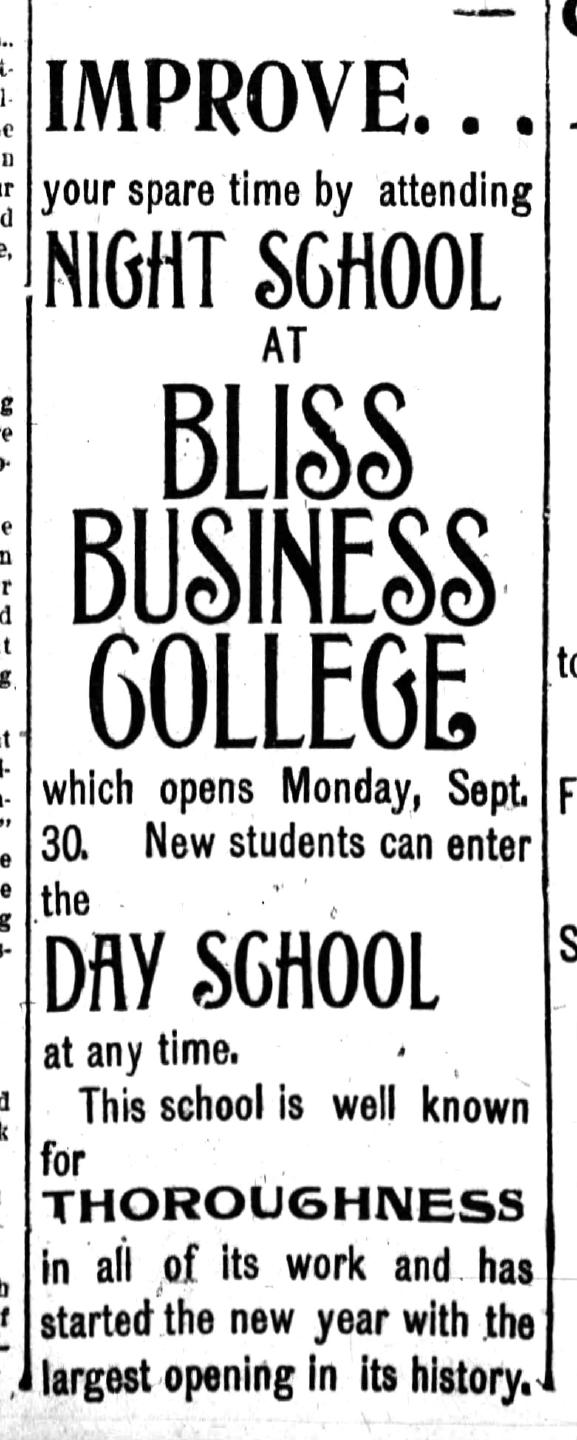
Day school at Bliss.
An advertisement in the paper for night and day school programs offered at Bliss Business College. | Source: Courtesy of the North Adams Historical Society.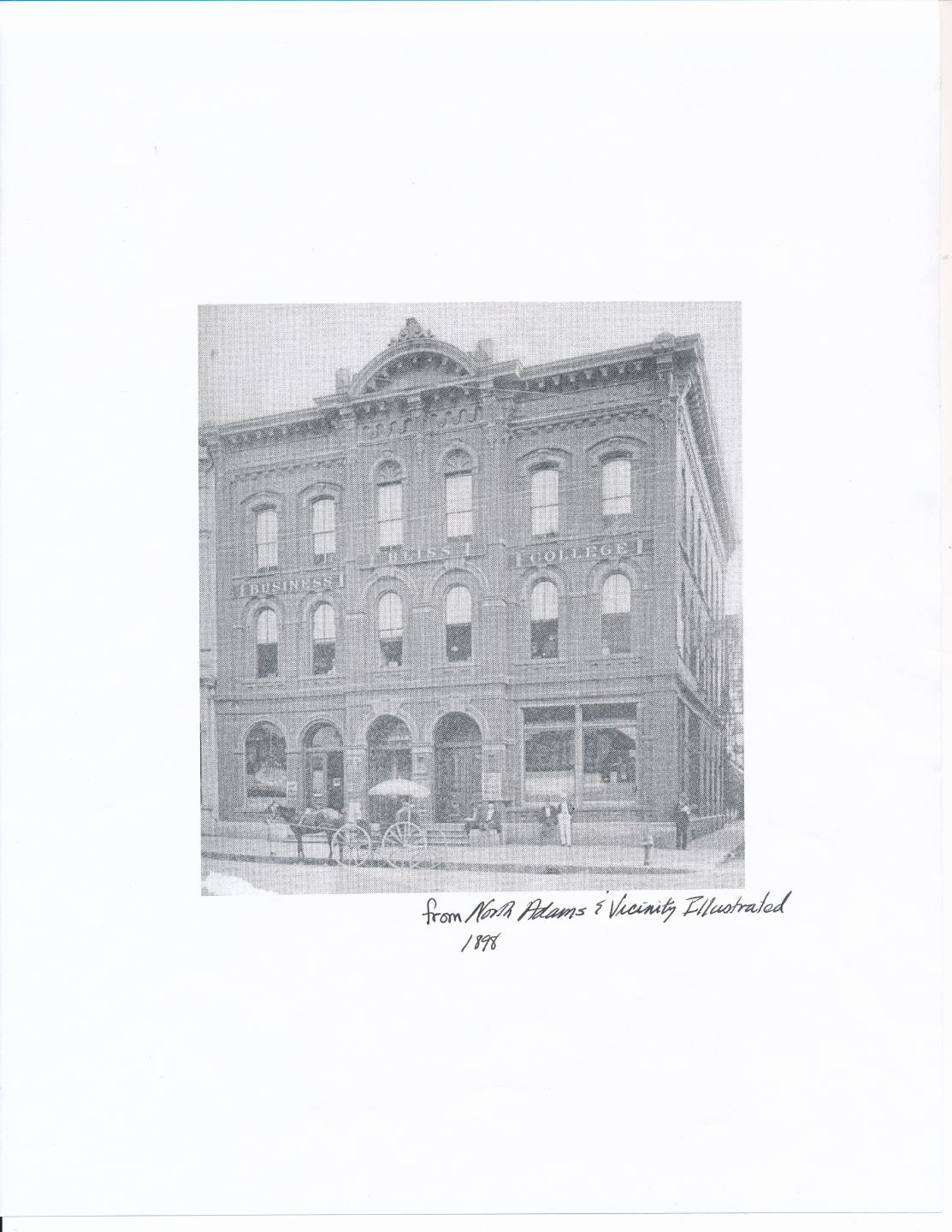
Exterior photo.
Bliss Business College in 1898. | Source: Courtesy of the North Adams Historical Society.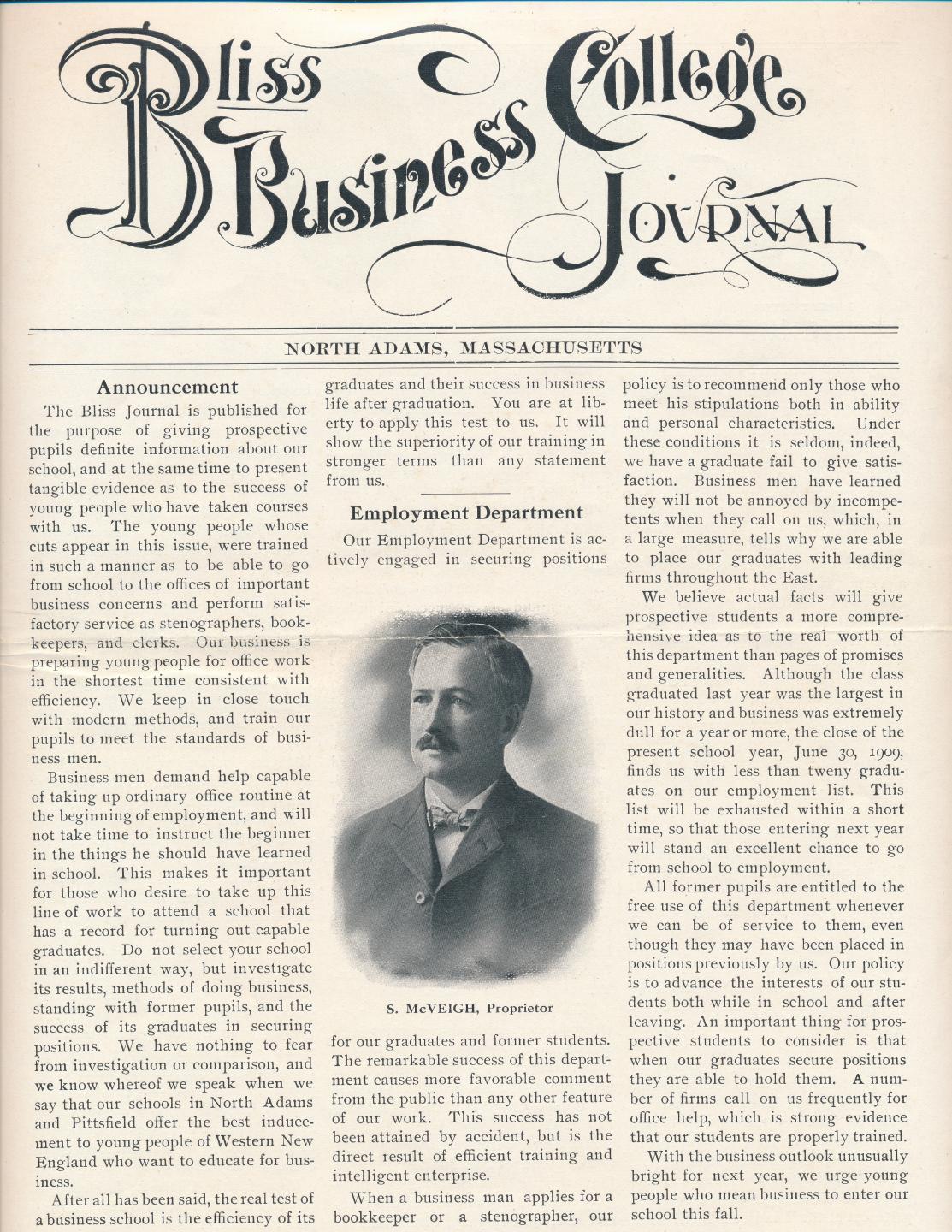
Bliss Business College Journal.
Sherman McVeigh, in the middle of the page, was the successor to E.J. Shaw after Shaw retired. | Source: Courtesy of the North Adams Public Library.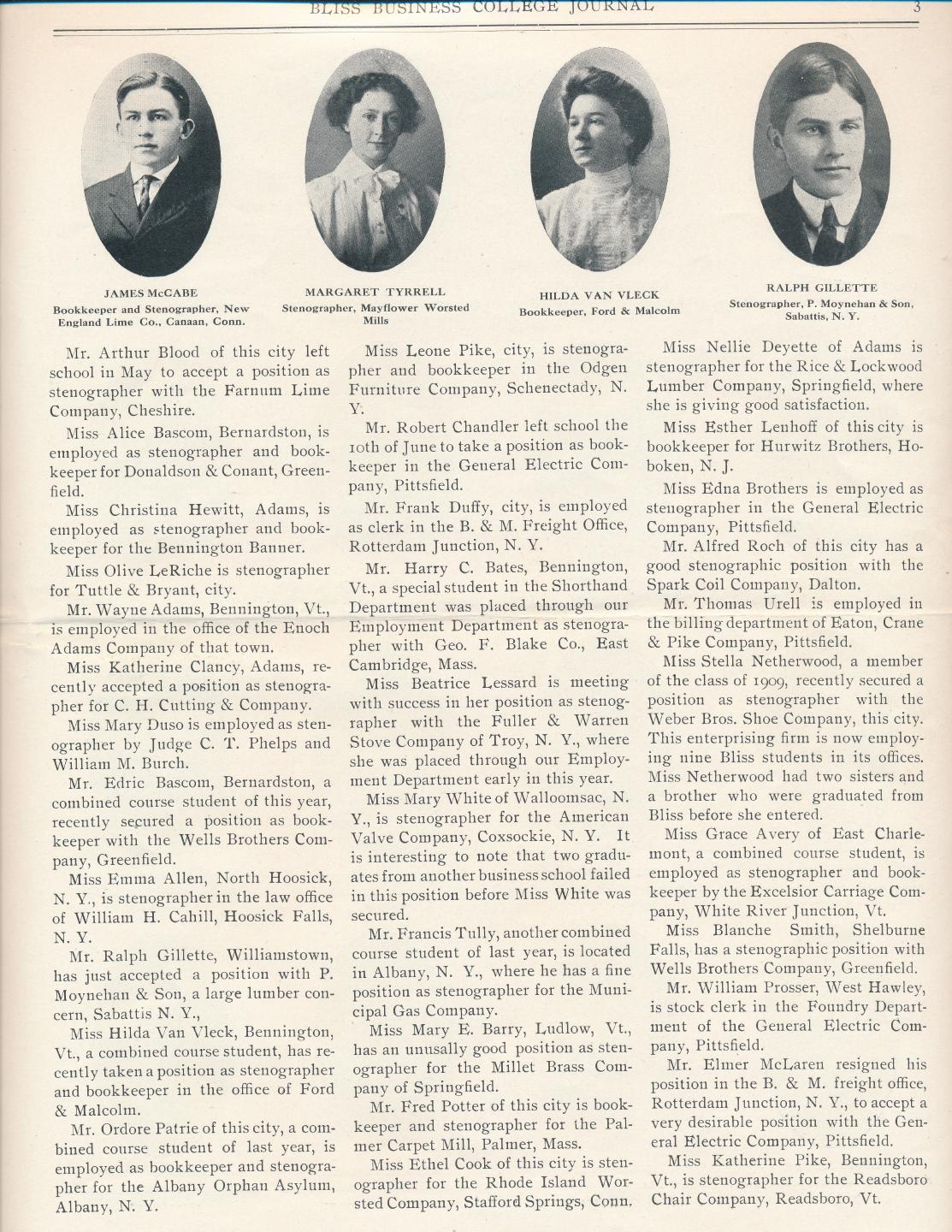
Bliss Business Journal.
Graduates from the college and the jobs that they took on after. | Source: Courtesy of the North Adams Public Library.