Lue Gim Gong: The Citrus Wizard
One man’s life was shaped by his unrelenting efforts toward his passions and friendship. His incredible accomplishments put into perspective what it truly takes to live a life full of accomplishments, fulfillment, and love.
Text
Lue Gim Gong was born in Canton, China in 1860. His parents were farmers, and when he was 12 years old, his uncle traveled from San Francisco to visit and told him he should come to the United States. That is all it took as he sailed over to the west coast where he was recruited to come work in Calvin Sampson shoe factory in North Adams, Massachusetts. He passed away in 1925 and was buried in Oakdale Cemetery in Deland, Florida. Due to the Great Depression, a bust that was planned to be erected in his honor was delayed and the plan was eventually abandoned. It took 75 years for him to be officially recognized as the Citrus Wizard. Lue lived by the proverb “No one should live in this world for himself alone, but to do good for those who come after him.”
After landing in America, he quickly landed his first job at the age of sixteen in the C.T. Sampson shoe factory in North Adams. While there, Lue fell ill and it is not certain what the diagnosis was, but assumptions point to tuberculosis. Miss Fannie Burlingame became aware of this through her Sunday School classes that he attended. She took him to her own home and nursed him back to health. While under Miss Burlingame’s care, he became Christian and a citizen of the United States. This display of care is most likely what showed Lue the power of friendship and caring, for she had saved his life without even knowing who he was. He later worked for her as a gardener. In 1886, at the age of 29, Lue traveled back home to China because he missed his mother dearly. He returned to the United States shortly thereafter, and decided the Massachusetts cold was too much and he moved to DeLand, Florida working for Miss Burlingame in her orange groves.
DeLand is where he began his life-long passion of working with citrus plants with Miss Burlingame’s brother-in-law, William Dumville. However, in December 1894 and February 1895, Florida endured two of the worst freezes ever recorded and 95% of the citrus groves in Florida were lost. Mr. Dumville had died during this time and Lue continued his work alone. Fannie Burlingame would visit from North Adams regularly until she died in 1903 when Lue was 46. Mr. Dumville’s wife left him the property and $10,000. He was devastated and was only left with a Rooster named “March” and two horses named “Fannie” and “Baby”. He spent the rest of his time experimenting and developing his groves and in 1911, he accomplished his biggest feat of crossing the “Mediterranean Sweet” with the “Hart’s Lake” and created a new orange, the “Lue Gim Gong”. This new orange was more resistant to cold and ripened in early fall. It was propagated by Mr. George Tabor of the Glen St. Mary’s Nursery and the nursery received a Silver Wilder Medal from the USDA. This award been never been given out for citrus. He also developed a grapefruit that grew singularly, instead of in a clump, an aromatic grapefruit with minimal juice, and propagated roses and other flowers and fruits.
Lue Gim Gong’s accomplishments are not only innovative and inspiring but are reflective of his struggles and pains in his life. His grave was left unmarked for five years until Mrs. Hawtense Conrad, a member of the New York State Historical Society, made the trip down to DeLand and collected and donated $3,500 for the placement of a new headstone. Though his name had almost faded, his legacy never will as it is rooted within his relationships and accomplishments through horticulture. Lue Gim Gong stayed true to his favorite verse: “No one should live in this world for himself alone, but to do good for those who come after him.”
Files
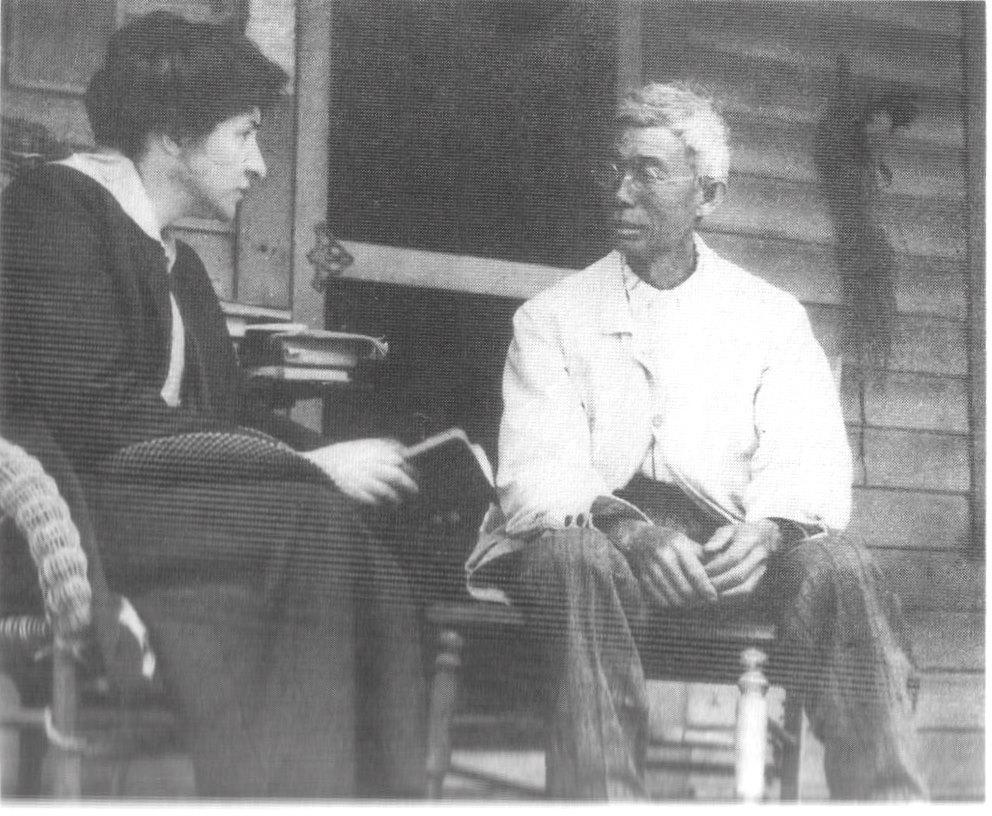
Lue Gim Gong with unknown female visitor.
First meeting her as a teen in North Adams, Fannie Burlingame had a lasting influence on his life, including helping inspire Lue Gim Gong to convert to Christianity. | Source: Courtesy of the North Adams Historical Society.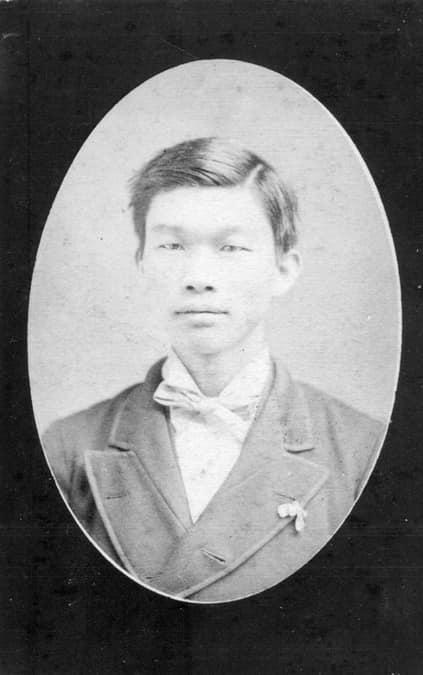
Lue Gim Gong.
Photo of Lue Gim Gong as a young man. | Source: Courtesy of the North Adams Historical Society.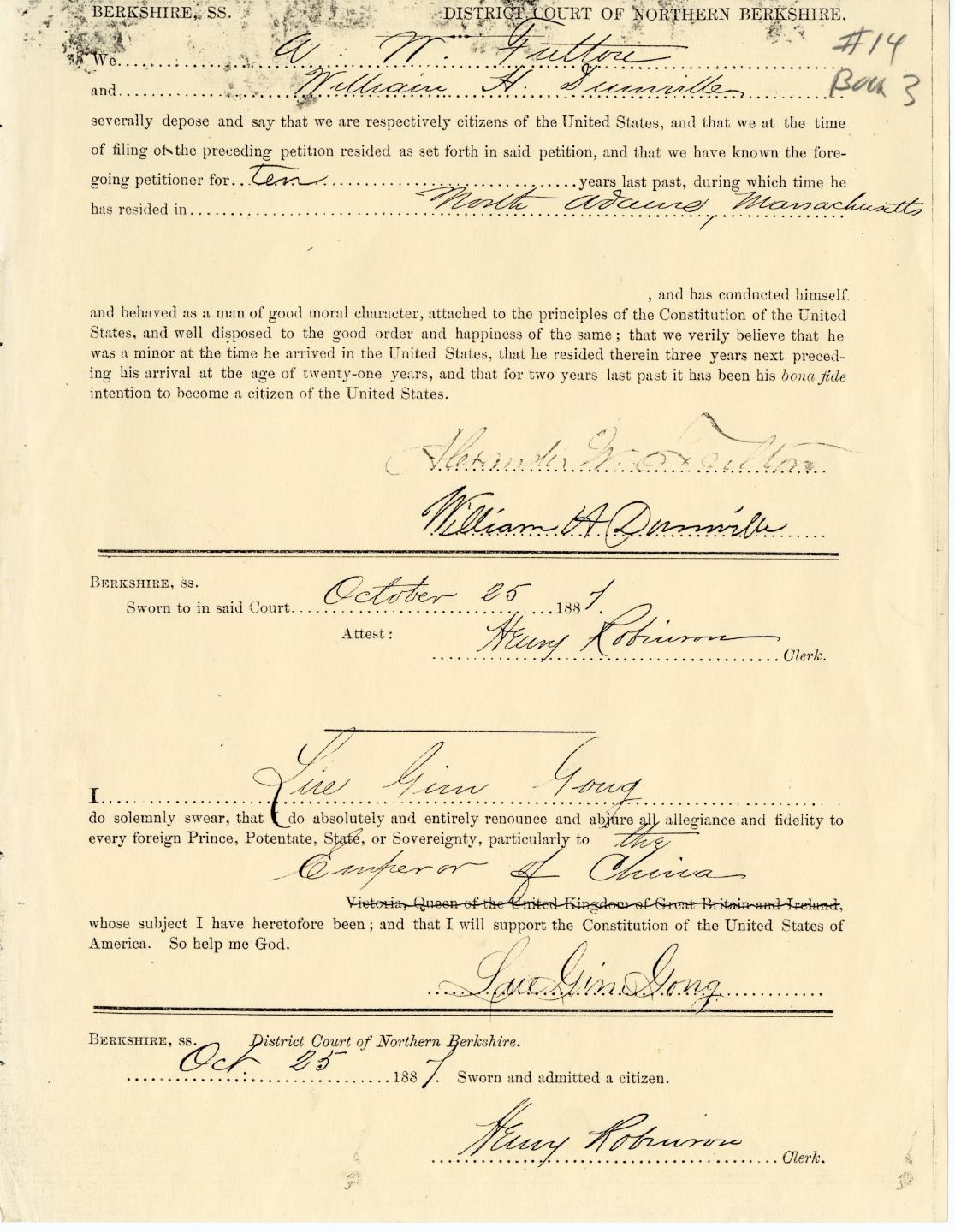
Lue Gim Gong application for naturalized citizenship.
This is the naturalization paper of Lue Gim Gong. It represents the journey he made from his homeland of China to the United States. | Source: Courtesy of the North Adams Historical Society.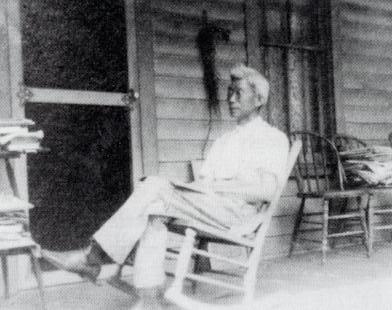
Lue Gim Gong candidly photographed on his porch.
His life was quiet, yet impactful and revolutionary. | Source: Courtesy of the North Adams Historical Society.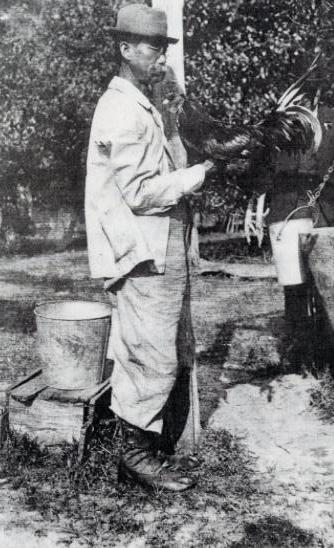
An older Lue Gim Gong is photographed here with his beloved friend March.
This rooster became his pivot after he experienced the loss of his life-long friend, Mrs. Burlingame. This friendship demonstrates the caring side of Lue’s character. | Source: Courtesy of the North Adams Historical Society.
Bust of Lue Gim Gong in DeLand, Florida.
This bronze bust of Lue Gim Gong exudes pride, innovation, and excellence. It is a representation of immigration and the rare abilities of those who come over to the United States with a dream. Lue was a pioneer, scientist, and creator, earning the “Citrus Wizard” nickname. | Source: Courtesy of the North Adams Historical Society.
Photo from the Worcester Telegram, April 16, 1921.
The article describes a visit to Lue Gim Gong from North Adams residents H.W. Clark and C.E. Winchell. | Source: Courtesy of the North Adams Historical Society.
Lue Gim Gong in DeLand, Flordia.
Selecting ripe fruits from Lue Gim Gong’s citrus grove in DeLand, Florida, in March 1894. Lue is sitting on the horse wagon third from left; Fannie Burlingame is standing third from right. | Source: Courtesy of the DeLand Historical Society.
Poster of Lue Gim Gong's citrus orchards in DeLand, Florida.
Source: Courtesy of the North Adams Historical Society.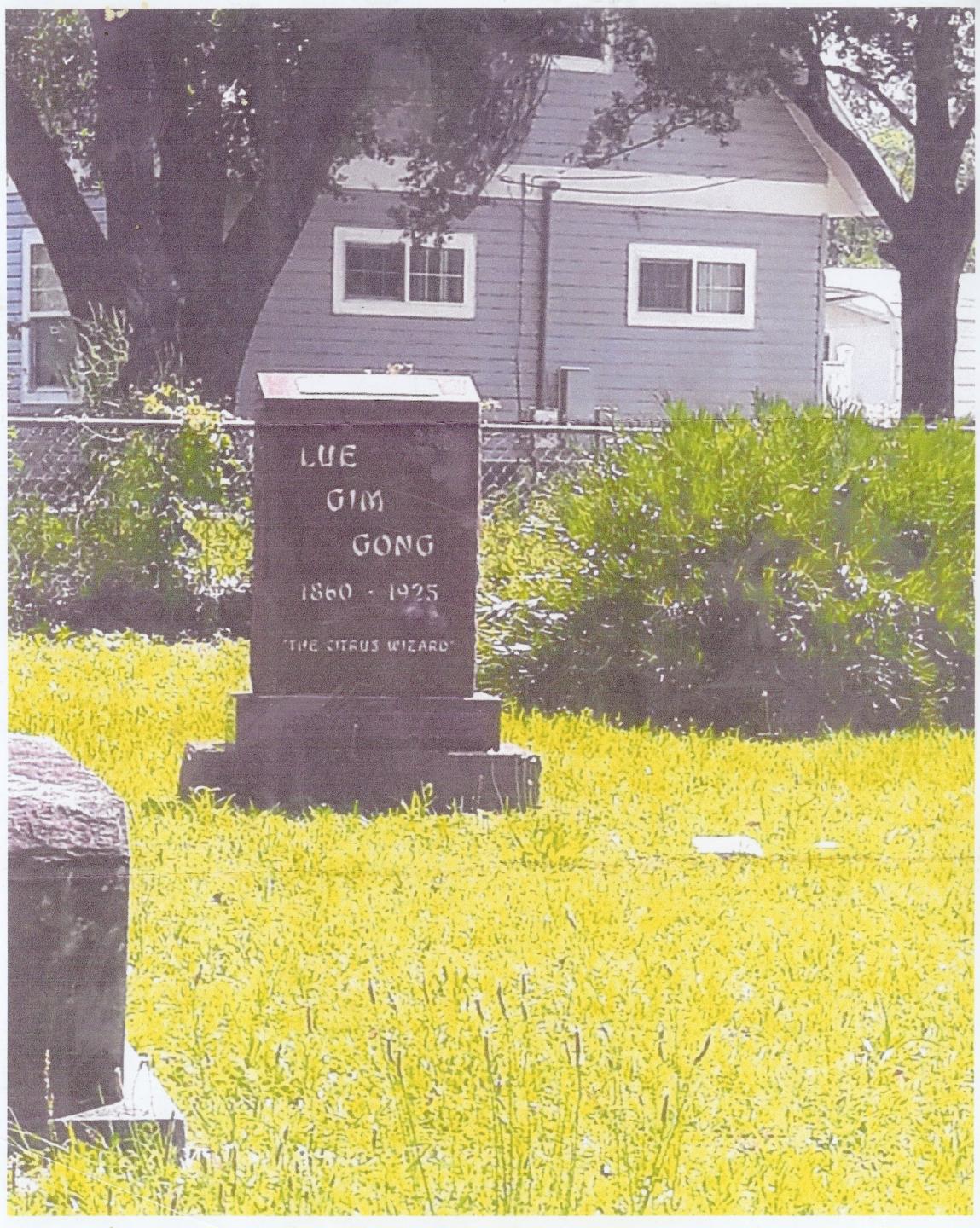
Lue Gim Gong’s gravestone in DeLand, Florida.
This grave lay unmarked for half a decade until Mrs. Hawtense Conrad raised the funds to place a marked stone. This is a testament to how strong his legacy and accomplishments were on citrus production in Florida. | Source: Courtesy of the North Adams Historical Society.