President Frank Fuller Murdock
MCLA’s legacy is defined by the influence of the Progressive Education movement, thanks to the work of the first president of the North Adams Normal School, Frank Murdock. Murdock integrated the ideas and philosophies of the Progressive Education movement into the curriculum of North Adams Normal School, which is embodied in the liberal arts structure of MCLA.
Text
Frank Fuller Murdock was born in Quincy, Massachusetts in 1859 and attended Charlestown high school. Later, he studied at Harvard University but left due to illness and subsequently graduated from the Bridgewater Normal School in 1879. He first gained his teaching experience in rural schools and later returned to his alma mater and was a faculty member at Bridgewater, before being appointed the first president at the North Adams Normal School in 1896.
Murdock remarked in his time that the popular mode of teaching at most New England normal schools was a traditional “medieval” format, which Murdock saw as out of date. He perceived that schools in New England through the 1870’s and 1880’s functioned in an Aristotelian manner, formulated around strict classroom procedures. At this time, Murdock was not alone in his beliefs. Through the late 1800’s and early 1900’s, the progressive education movement advocated for a shift away from the old rigid forms of education, and towards a natural, hands-on approach.
Murdock, alongside other influential educators such as John Dewey, had significant impacts on education systems in the United States. John Dewey is the most famous advocate of the Progressive Education movement and is most notably known for the publication of his pamphlet, The School and Society. In this pamphlet, Dewey advocated for “manual training”, a system wherein students are educated by nature with real things and materials, emphasizing a shift away from traditional classroom methods, and instead focusing on learning through physical action.
Sharing some of the philosophy of “manual training”, Murdock labeled his teaching systems as “practice teaching” which taught children through methods such as gardening, woodworking, printing, weaving, sewing, cooking, and more. Murdock perceived these techniques as a means of helping children to adapt more naturally to their environments.
Murdock’s philosophy manifested in education through his methods of educating children in geography. Murdock advocated for the use of geography as a teaching tool, one which has the capacity of fostering intuition, judgement, and mental faculties of the students. This approach was influenced by his early experience in rural regions. Murdock had experience in cities, as well as rural schools. This varied experience influenced his belief and advocacy for rural students receiving the same quality of education as urban students. This belief is what birthed his “practice training” approach.
In his methodology, geography and the natural world became a tool through which the students could discover themselves. Frank Murdock had a philosophy of “learning in place”, putting children in contact with the physical geography of their place was an effective learning tool. Murdock described using simple natural phenomena such as snow, to facilitate learning experiences for young children. His process allowed for the natural world to become a catalyst for building intuition and natural judgement faculties.
Although today Murdock may not have the same national recognition as leaders like John Dewey, during their time as contemporaries, Murdock received national recognition and accolades. For example, in 1907 he was commissioned by the state to study industrial education movements throughout the country.
Dewey, Murdock and many others have shaped education culture in the United States, both during their time, and for today. North Adams Normal School becoming the Massachusetts College of Liberal Arts is a sort of return to form in this regard. Liberal Arts challenges traditional educational methods and encourages learning styles that mirror the approaches of Progressive Education advocates like Frank Murdock.
Files
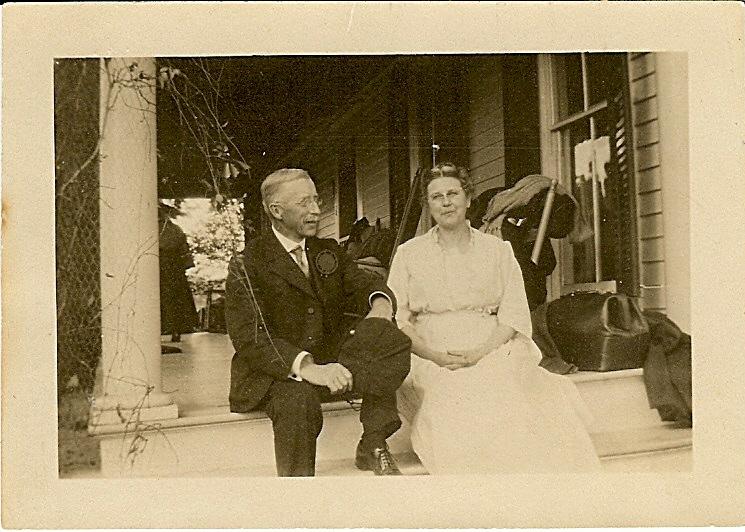
Frank Murdock and his wife Alice together on their porch.
Source: Courtesy of MCLA Freel Library.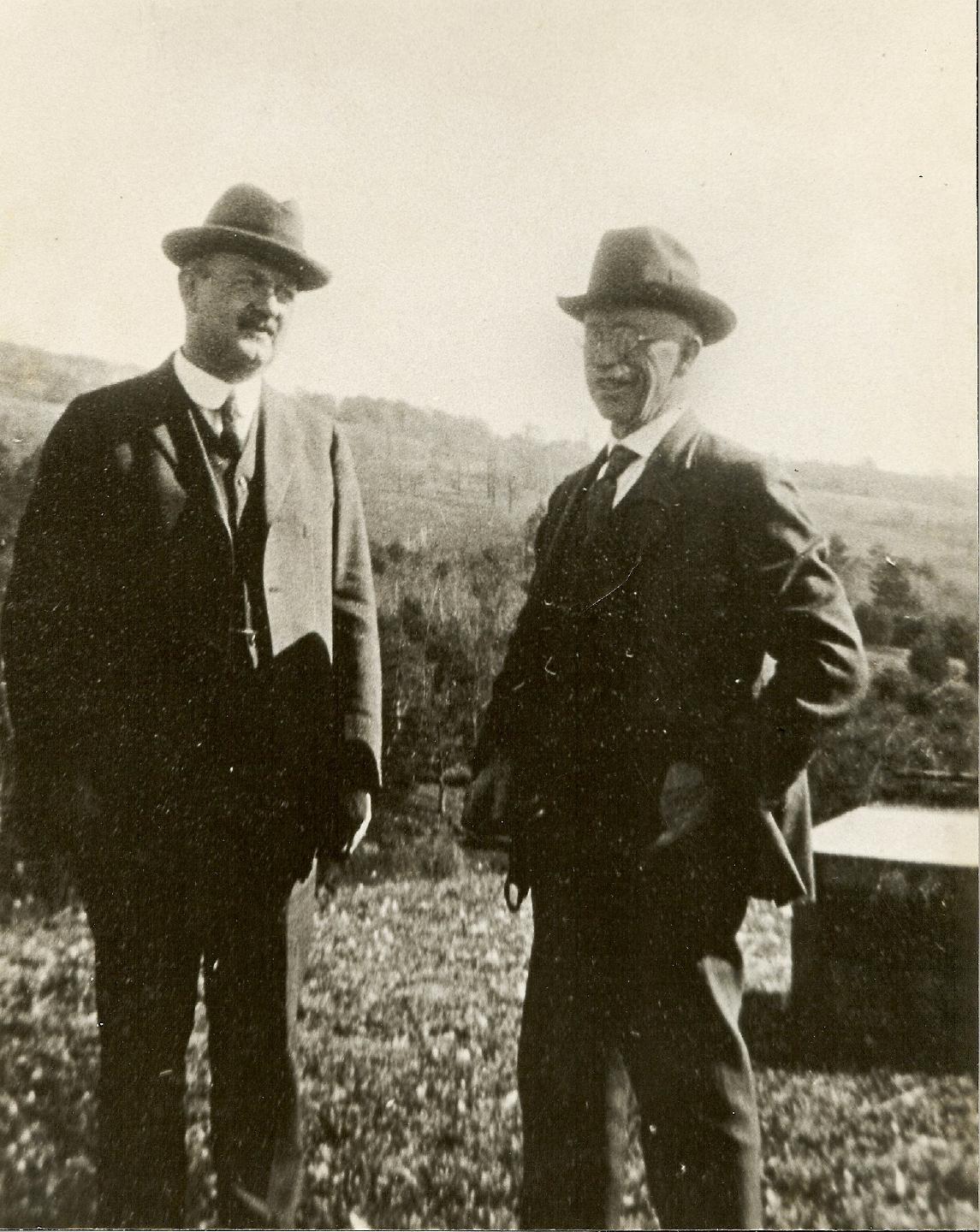
Frank Murdock alongside his successor, Roy Leon Smith, who was previously the instructor of science at the Normal School
Source: Courtesy of MCLA Freel Library.
Portrait of Frank Murdock during his term as president.
Source: Courtesy of the MCLA Freel Library.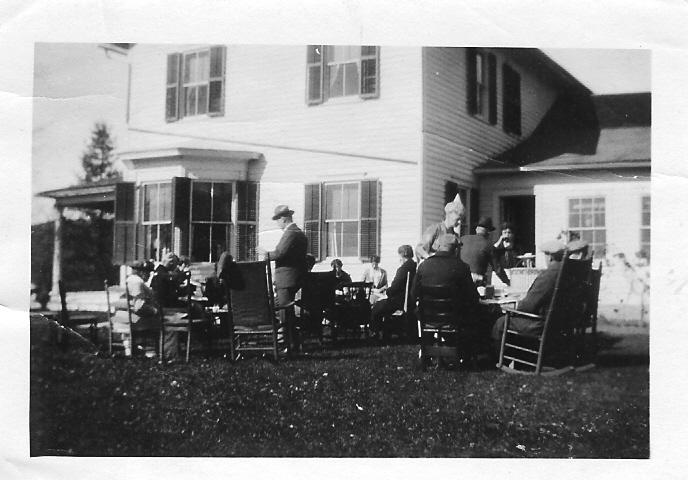
Principal Murdock and Roy Leon Smith circa 1915, hosting a picnic outdoors.