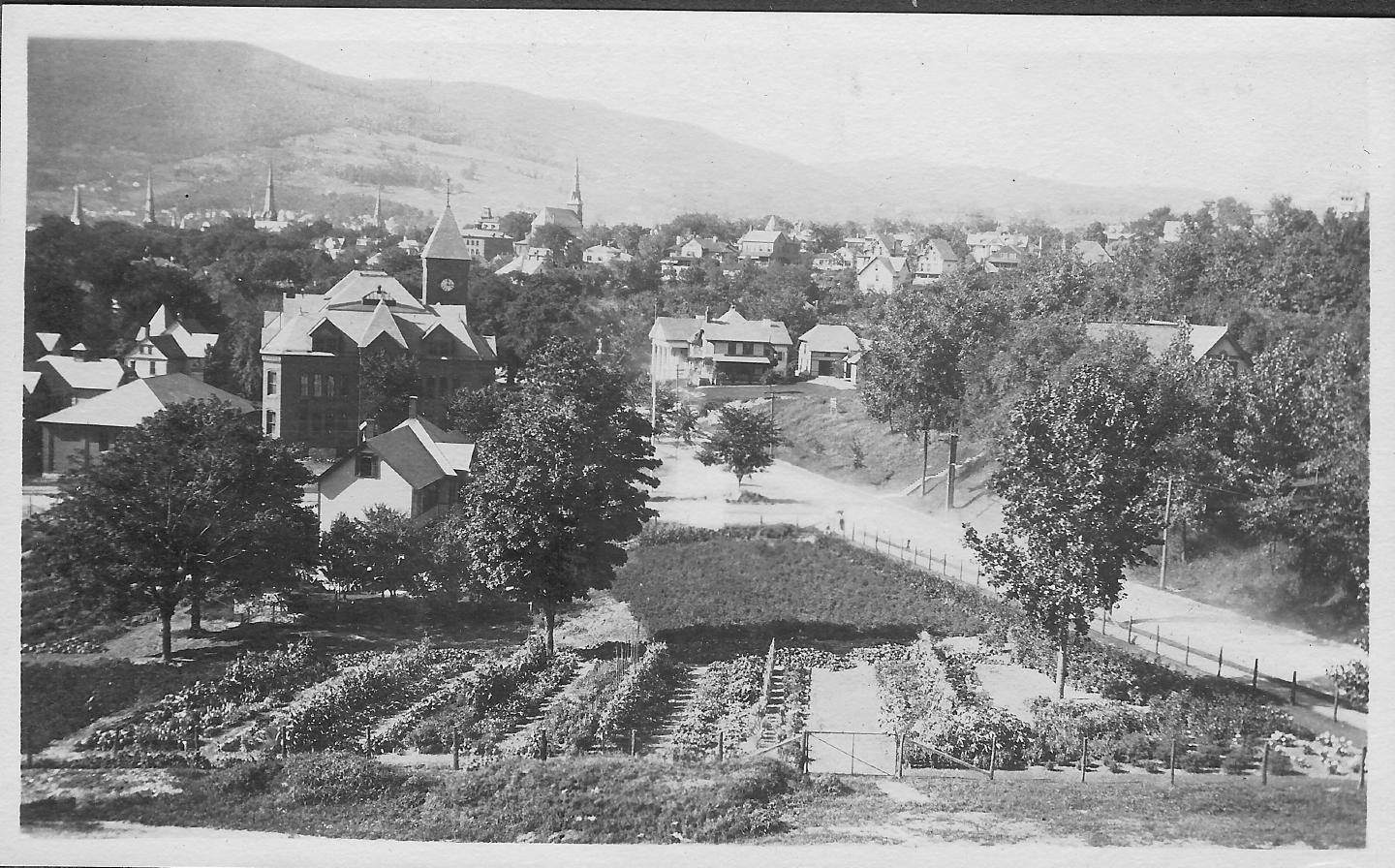
North Adams Normal School Campus Gardens
MCLA was formally a state normal school known as North Adams Normal School and provided school gardens used by urban and rural training schools to teach school-aged children the value of gardening and agricultural practices. The campus gardens were used to educate children to be helpers to their families by providing extra curriculum for the students to learn about food production, beauty, and economic efforts.
Text
During the normal school days, the school had an extensive array of gardens located right on campus. The state's normal school was the first in the East to introduce the professional supervision of rural schools. Principal Frank F. Murdock was one of the first educators to acknowledge that students should benefit from the practical educational value of schooling, not just focus on conventional ideals. The training schools were located near the normal school and housed several acres of garden land. Each grade had designated learning outcomes that were attributed to the learning objectives made by the agricultural department and overseen by a normal school instructor. The aim for the rural school programing was to teach children practical experiences with living plants.
By working in the gardens, students developed an appreciation for the gardens and the rights of others. Each grade demonstrated knowledge of common agricultural and gardening practices. Students prepared seed beds, sowed seeds, transplanted and thinned out seedlings, and kept the school beds and paths free of weeds. Kindergarten to third grade students demonstrated imitative gardening, growing flowers for their ornamental value and having the pleasure to pick them after the growing season ended. Fourth to sixth grade students were given their own plots that they were responsible for the care of and where they grew grasses, forgeable crops, flowers and vegetables.
These responsibilities resulted in developing first-hand knowledge of agriculture, appreciation of plants, and their various uses. Seventh to ninth grade students conducted gardening practices for commercial use. Students were able to either work individually on their own plots or as a class effort. Displays of flowers and vegetables were made for local fairs. Profit from the sales contributed towards the further investment of seeds, fertilizers, school furnishings, and class funds. Although gardening was not required for eighth and ninth grade students, many students who had a special interest embarked on the privilege to work in gardens.
Each growing season provided its own set of responsibilities. During spring, students observed manuring, plowing, harrowing, and participated in the implementation of scientific knowledge and agricultural practices. During the summer, the school gardens were worked on by one half of the total students; they cared for their own and other students' gardens, maintained the crops, gathered produce, and either took the produce home or sold it at the local markets. Students further utilized their skills from rural school training by supporting their families with home gardens. Summer instructors encouraged the undertaking of home gardens, helped to inspect home plots, and confer with families about the students' needs to succeed.
The rural training schools made it possible to extend agricultural education and contributed towards furthering the student's education by building their first-hand knowledge of agriculture, motor skills, and appreciation towards plants and gardening.
Files
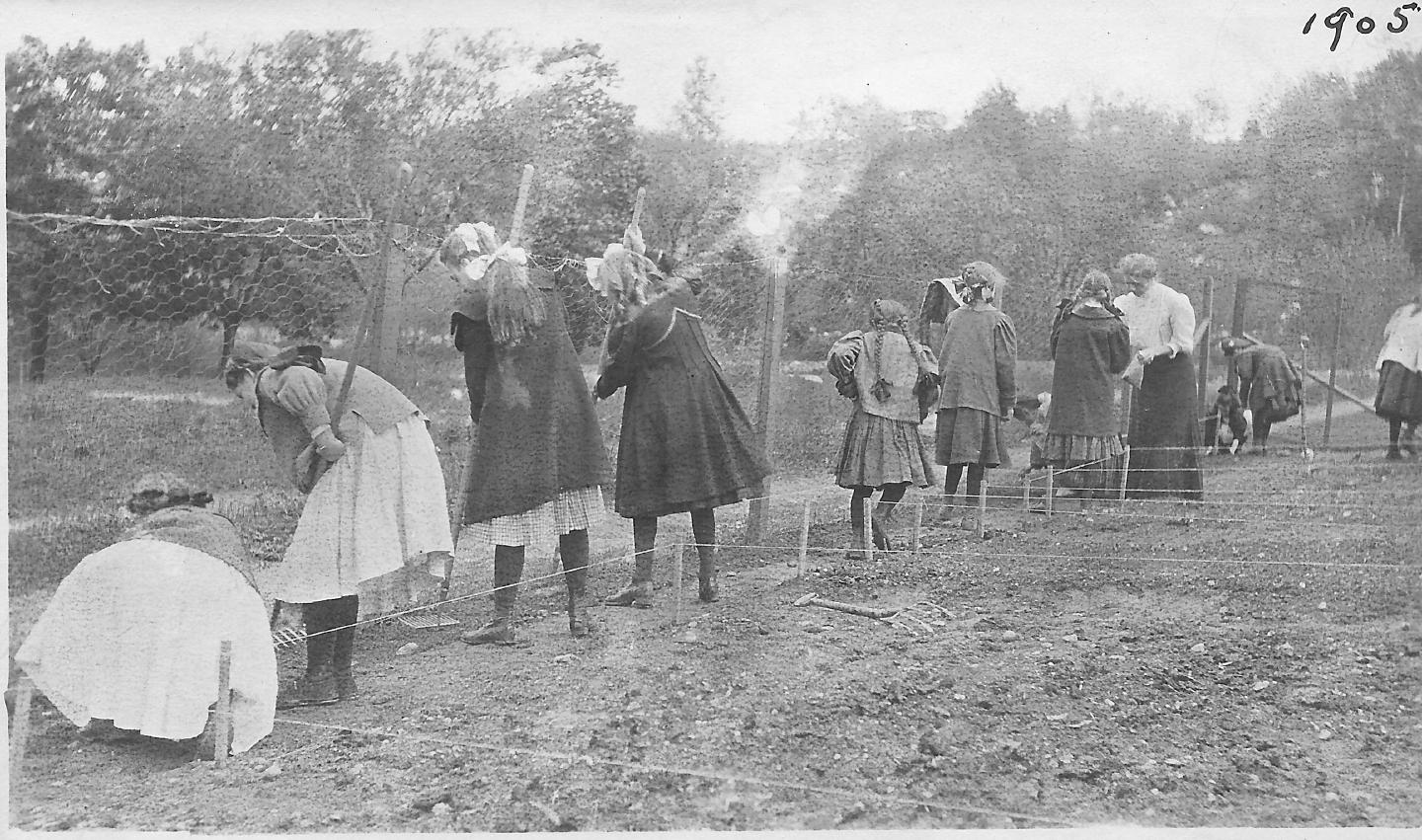
Normal School Gardens 1905.
The group of students gardening and working in the field were supervised by their regular teacher or a normal school student teacher. She is depicted to the right wearing a white blouse | Source: Courtesy of MCLA Freel Library.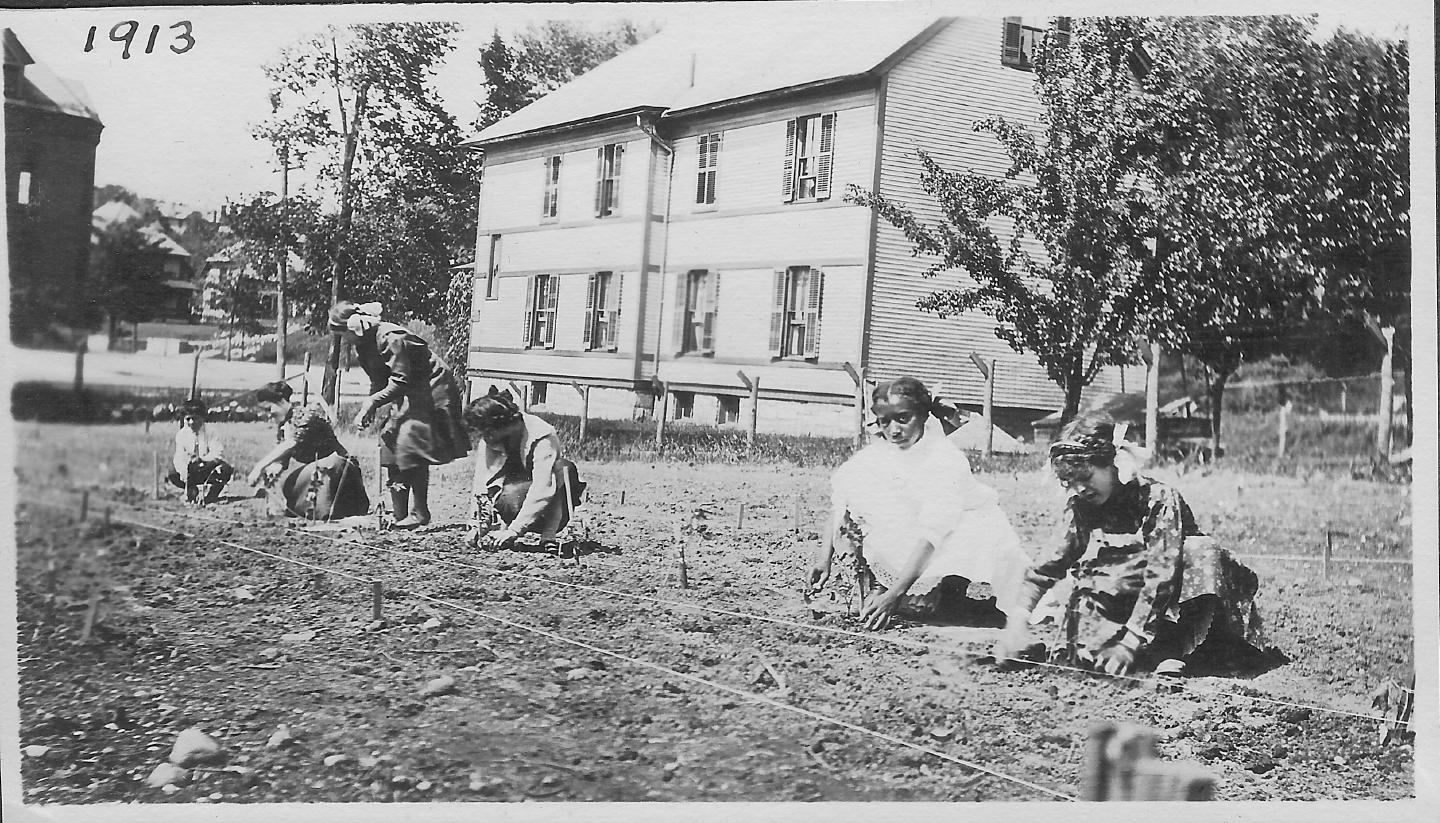
Normal School Gardens, 1913.
Students plant seeds near the corner of Church and Blackinton Street. The building to the left is Mark Hopkins. | Source: Courtesy of MCLA Freel Library.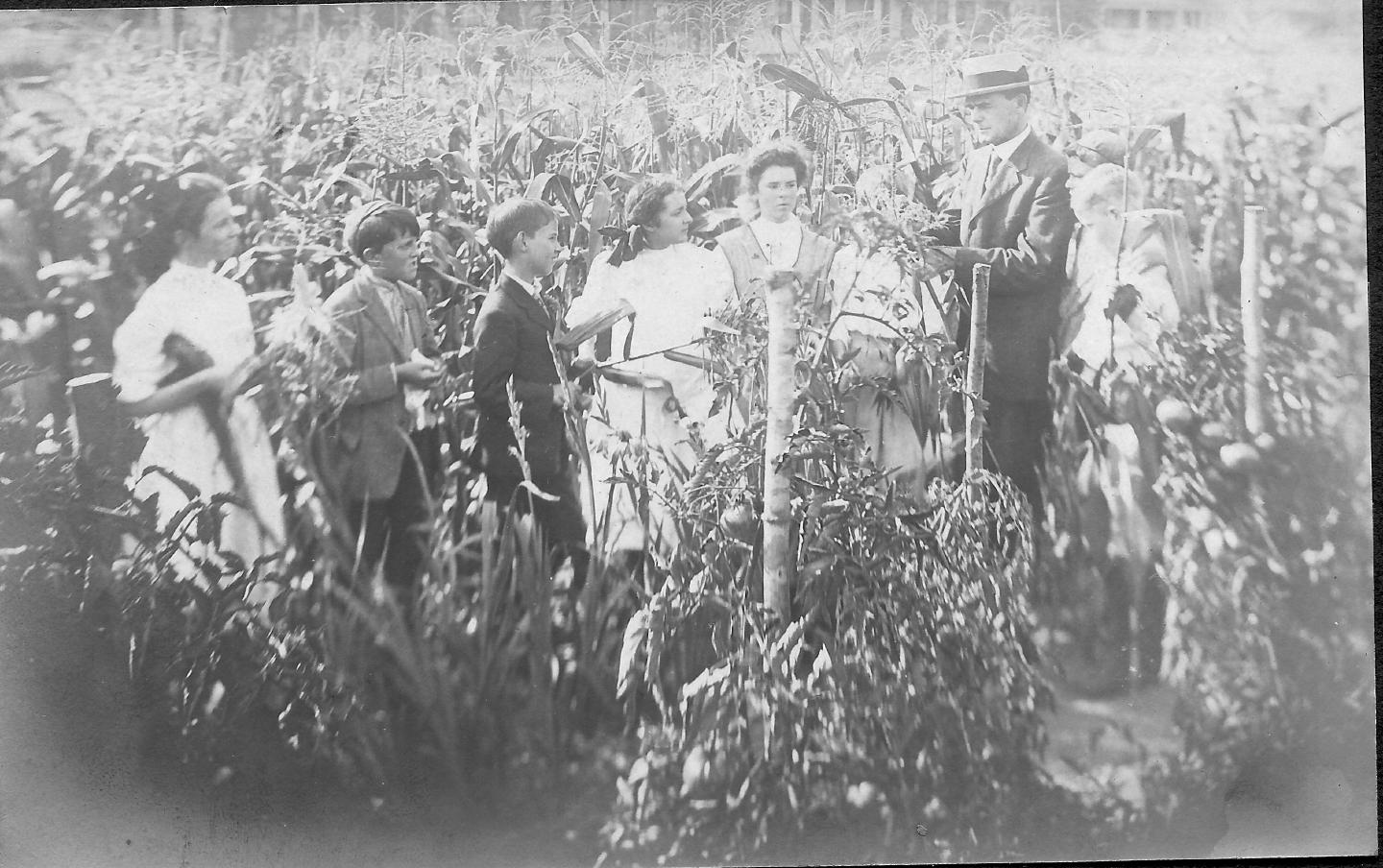
Normal School Gardens, 1908.
Elementary school students taught by Ronald Guss, faculty member from 1897 to 1914. He taught courses in natural sciences and natural study. He is depicted to the right. | Source: Courtesy of MCLA Freel Library.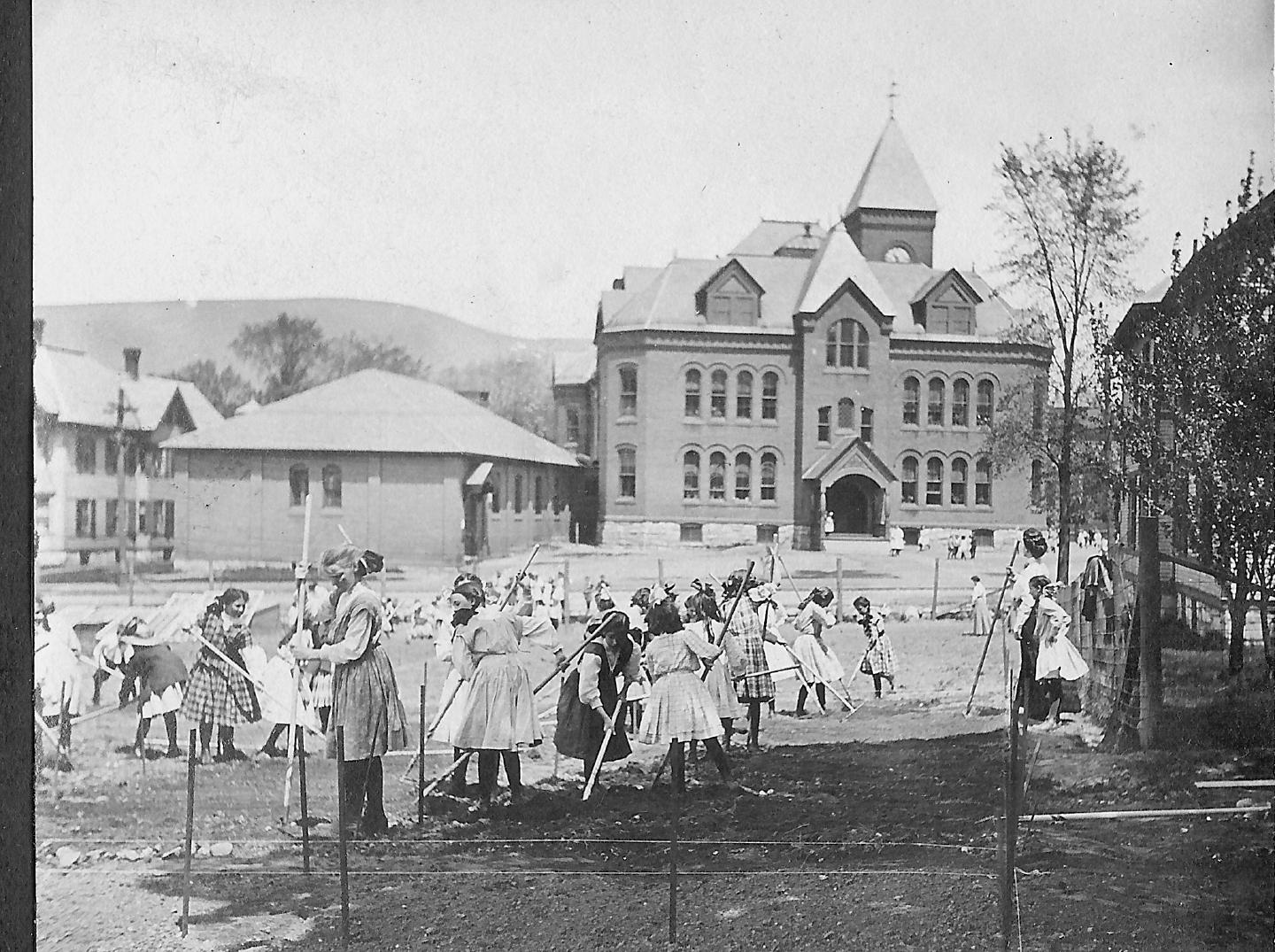
Normal School Gardens, 1910.
Group of students preparing the gardens for the growing season. Supervised by their regular teacher or a normal school student teacher. Mark Hopkins and the gymnasium displayed in the background. | Source: Courtesy of MCLA Freel Library.
Normal School Gardens, 1910.
View looking towards Mark Hopkins and downtown North Adams. This image pictures the extent of the gardens. Currently, Freel Hall, Eldridge Hall, the new Mark Hopkins and the Feigenbaum science building occupy this land. | Source: Courtesy of MCLA Freel Library.