Stories from the Sprague Log: 1945: Sprague Electric's Wartime Production
Following the United States entry into World War II in 1941, companies like Sprague Electric leaned towards war production. It was not just the company’s production that aided in the war effort, but the efforts of the community, and the workers themselves, that made a major difference.
Text
Following the United States’ entry into World War II in 1941, companies like Sprague Electric leaned towards war production. It was not just the company’s production that aided in the war effort, but the efforts of the community, and the workers themselves, that made a major difference.
Sprague Electric was heavily involved in the making of components and other items to serve the U.S. military after the United States entry into the Second World War. The company and its workers worked in various ways to help with the war effort, not only making components the military relied on but also in purchasing war bonds, donating blood, as well as volunteering for programs like nurses’ training. Both the company and its workers in North Adams were deeply engaged in aiding the country during the war, and their efforts were successful in many ways.
Their production during wartime was certainly one of the most notable contributions from Sprague Electric, however, the employees at Sprague did more than just make equipment for the army. Individuals volunteered for nursing programs, donated blood, bought war bonds, and more.
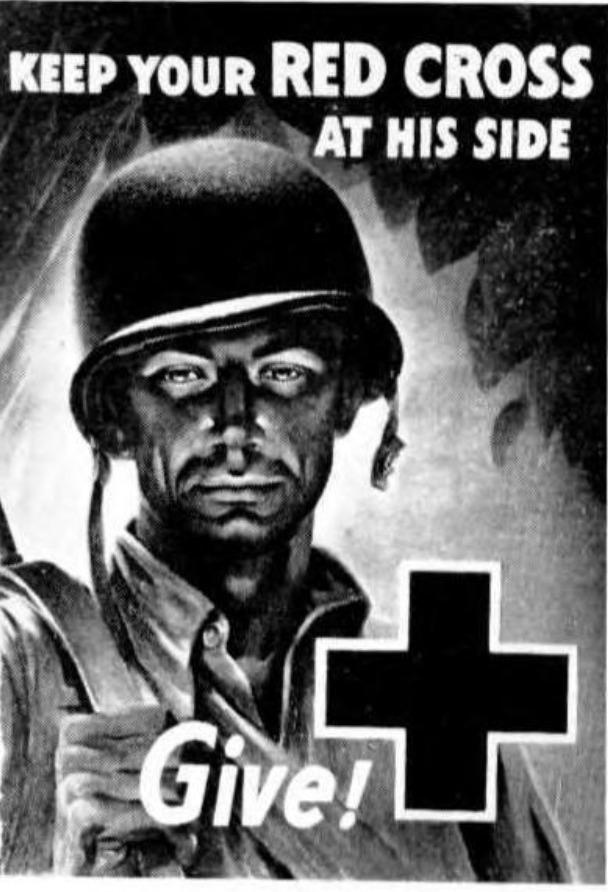
The Sprague Log is an example of documentation from this period that contains extensive information about blood drives, helping others, volunteering, fundraising, and showing support for soldiers and veterans. While soldiers were at war, citizens at home supported the war through their regular acts of service. Blood donation events also occurred and were advertised in the Sprague Log. Each of these events were reliant upon individual volunteers showing up and donating blood. Sprague Workers' acts of personal sacrifice helped save lives during war.
Another focus of featured in the newsletters centers on citizens who supported soldiers and veterans during that period through fundraisers, care package shipments, and assistance with public recognition events. Workers raised funds to help purchase war bonds, collected material supplies for the soldiers, and created recognition events for those soldiers serving overseas. These actions not only worked to provide material resources but also positively impacted the morale and sense of community for the entire area throughout the war.
Sprague was constantly earning awards and honors due to their contributions and production towards the war effort. Sprague acquired multiple Army Navy “E” awards for excellent wartime production. There were 85,000 businesses eligible to earn an “E” award, with only five percent of that 85,000 being recognized, and Sprague won four. This demonstrated the success of company production and its crucial contribution towards the war effort as “Sprague produced 9,675 different electrical components...used by all sections of the military.” Sprague employees were constantly receiving letters from the army and navy officials thanking them for their continued work and their support. There were poems written about the wartime production, showing the enthusiasm and positive morale of the employees despite the stressful and very important work being done.
Having employees be so enthusiastic and dedicated to their work allowed Sprague to thrive in wartime production. Sprague Electric was trusted to produce products “...which triggered the atom bomb dropped on Nagasaki” and provided important parts needed to push back the Nazis at the Battle of the Bulge.
These combined efforts show that the production done by the employees at Sprague Electric was very important to the war effort and the success of the U.S. military in WWII. Sprague received multiple awards from both the army and navy as well as letters thanking them for their ongoing effort towards the war, marking Sprague Electrics’ key contributions to American military success in WWII.
Files
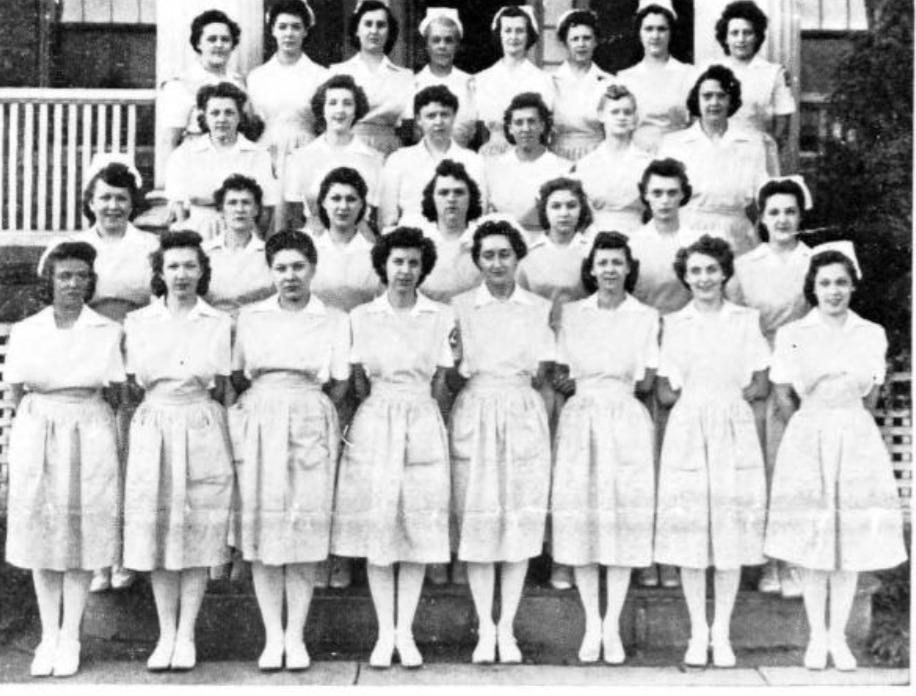
Nurse Aids at Sprague Electric.
One of the largest classes of Nurses Aides graduated from the North Adams Hospital on May 31, 1945. Sprague employees were represented by 13 members: first row—Margaret Daub, Rita Ross, Janice Kelouin, Jeanette Denno, and Marie Rose Lussier. Second row — Mildred Marcel, Mary Zona, Mary Conrad, and Verna Lamore; third row—Rita Card and Katherine Darling; and fourth row—Emma Underwood and Annette Reopell Lacuessa. | Source: Sprague Log, June 23, 1945, vol 07, no 22, page 1.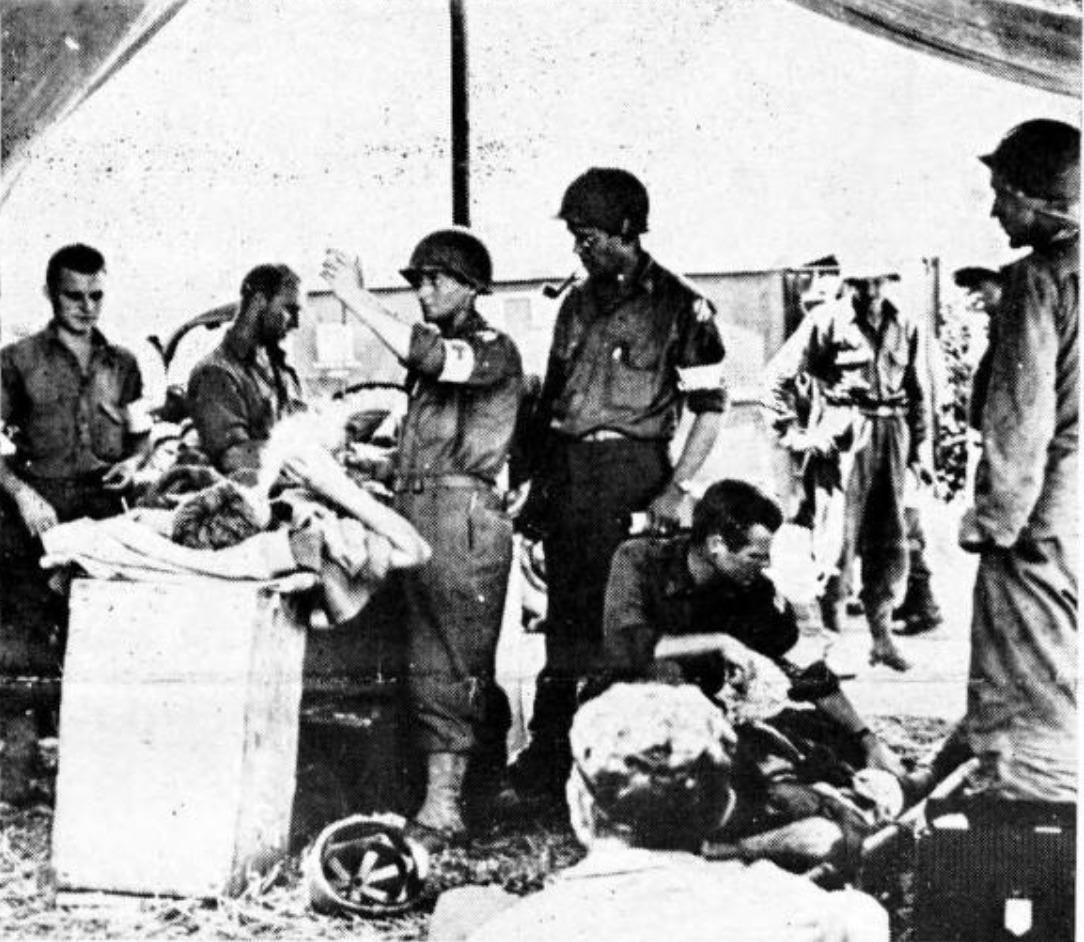
Soldiers being treated in a tent.
American military personnel throughout the Second World War donated their blood to military blood drives in order to provide the much-needed plasma to troops who were wounded in combat, and many civilians stepped up to continue to help strengthen the US military medical system for American warriors in combat by assisting with the creation of that medical system. | Source: Sprague Log, March 10, 1945, vol 07, no 15, page 1.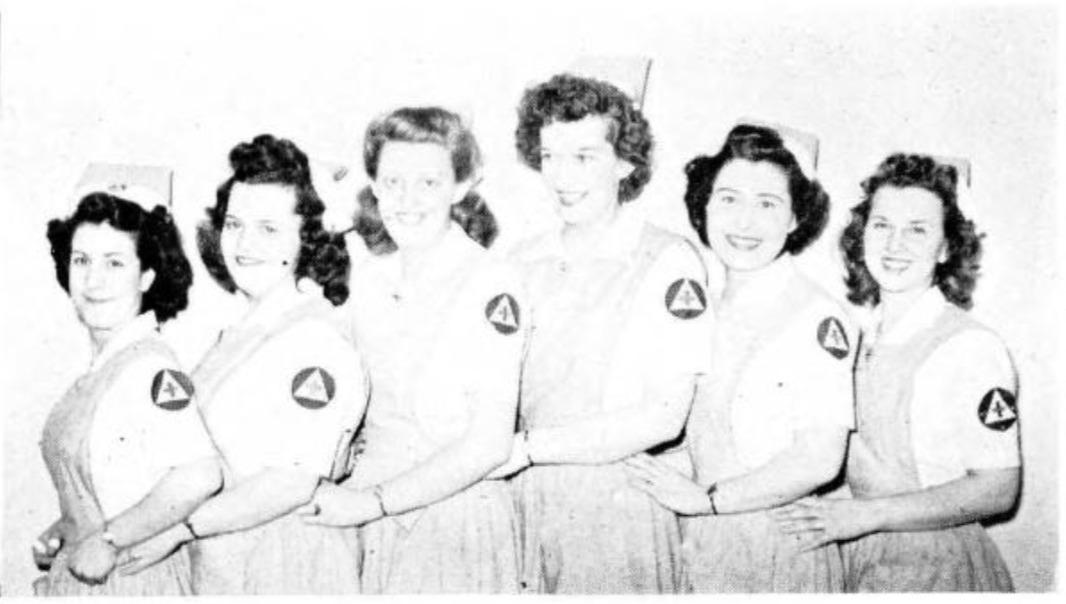
Nurses Aides.
These Nurses’ Aides, employed full-time at Sprague Electric Company, completed the required hours at the North Adams Hospital, making them eligible to enter army hospitals. They are Norine Colo, Doris Lliser, Betty Alderman, Eleanor Jean MacKay, Kathleen Mullen, and Jessie Waryjasz. They had worked over 150 hours at the local hospital. | Source: Sprague Log, March 24, 1945, vol 07, no 16, page 1.