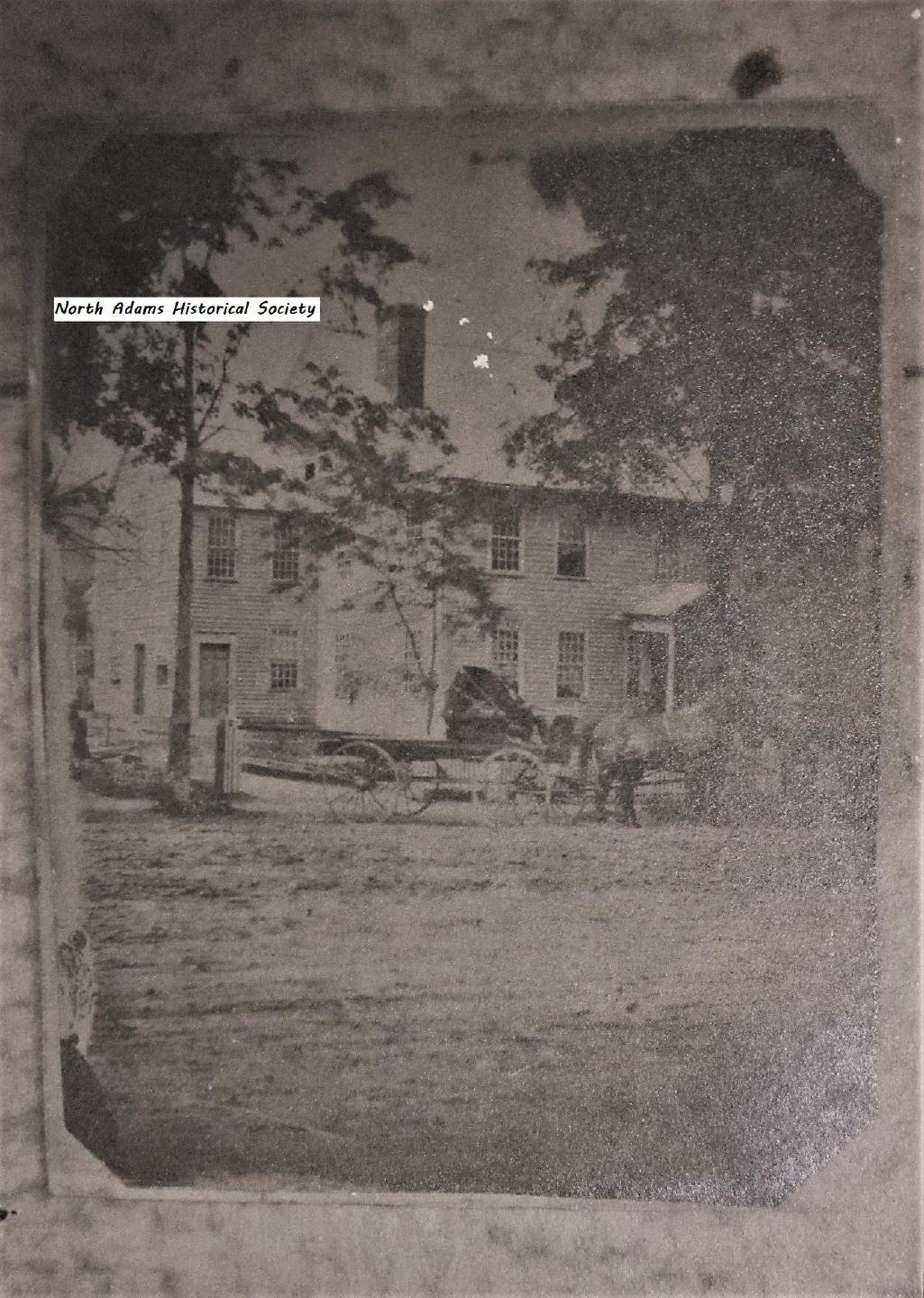
Jeremiah Colegrove
Fleeing capture around 1802, a fugitive slave woman found herself cornered until one man, at great personal risk, took her in and hid her from those who sought to return her to bondage. That man was Jeremiah Colegrove, one of the first industrialists in North Adams and a figure of immense moral conviction and personal strength.
Text
Born in Rhode Island in 1758, Jeremiah Colegrove came of age during the American Revolution. Drafted at 21, he served for several years, mostly as an armorer and gunsmith, sharpening the skills that would serve him in peacetime. After a brief stint in Charlton, he traveled to North Adams in 1793 and was captivated by the raw power of the Hoosic River. He moved there permanently in the next year, when the village had fewer than a dozen homes. Colegrove quickly became a major landowner and one of the key founders of North Adams’ industrial base. In 1794, with help from his brother-in-law Elisha Brown, he purchased a dilapidated saw and grist mill from Giles Barnes, along with 80 acres of surrounding land. Though he never operated the original grist mill, he ran the sawmill briefly to produce lumber for the construction of new mills. In 1795, he built a dam—later known as the Phoenix Dam—and a new grist mill. Around 1800, he added an oil mill, which was later converted into another grist mill before burning down in 1854. His mills brought work and economic development to the area. By the early 1800s, Colegrove operated a grist mill, flaxseed processing plant, and blacksmith shop, all powered by the dam he constructed. He also used Eagle Street—then his private road—to haul lumber, later donating it as a public highway. His leadership helped turn North Adams from a sparse riverside village into a bustling industrial town. Colegrove was more than just a businessman. His moral compass was unshakable, and his sense of justice never wavered. The story of him sheltering a fugitive slave woman isn’t just a dramatic footnote—it’s a testament to the kind of man he was. Though a Federalist in a staunchly Democratic town, his honesty and wisdom earned him widespread respect. Even political rivals turned to him in times of crisis, trusting his judgment above their own partisans. He served more than 20 years as a justice of the peace, though his political views likely kept him from higher office. He was not a churchgoer, but he lived a life of deep moral integrity. Tall and athletic, with “nerves of steel,” Colegrove didn’t seem to understand fear. He led by example, never asking his workers to do more than he would himself. Jeremiah Colegrove died on August 26, 1837, at the age of 79. He was originally buried on a piece of land he owned in what is now downtown North Adams. His widow, Lydia Colegrove (née Waterman), later deeded the land to the First Baptist Church with the stipulation that it be used as a cemetery—what became known as the Old Colegrove Cemetery or the North Church Street Cemetery. Around 1905, the city purchased the property and transformed it into a public park with a bandstand. Colegrove’s remains were respectfully relocated to Southview Cemetery, where they rest today, while the park and nearby Colegrove Park Elementary School remain a living memorial to his impact on the city he helped build
Files
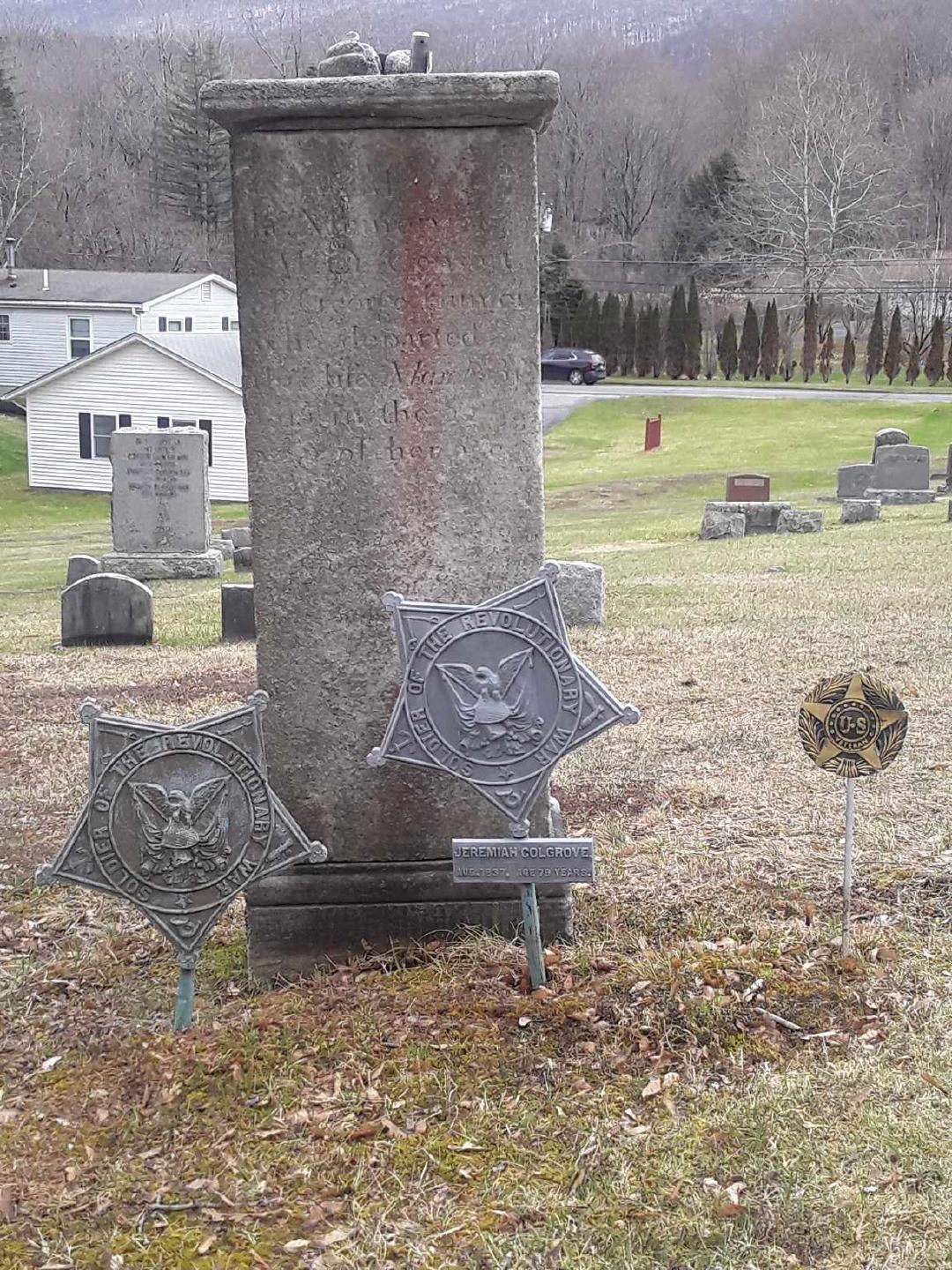
Jeremiah Colegrove's gravestone.
Jeremiah Colegrove’s gravestone and veteran markers at his final resting place in Southview Cemetery. | Source: Photo by Michael Boudreau, April 2025.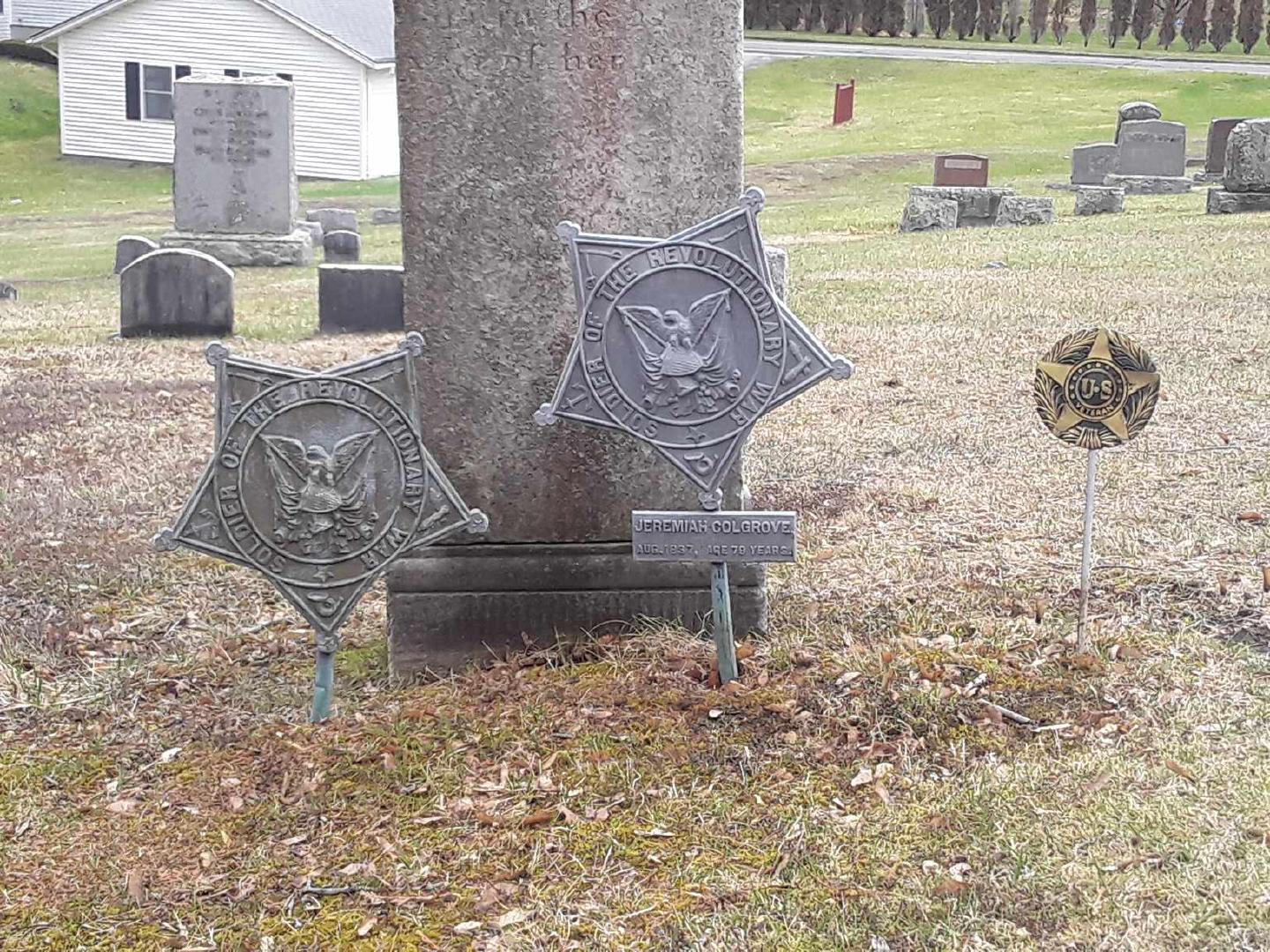
Markers designating Jeremiah Colegrove's military service.
Close-up of Jeremiah Colegrove’s gravestone markers noting his 2-3 years of service during the American Revolution | Source: Photo by Michael Boudreau, April 2025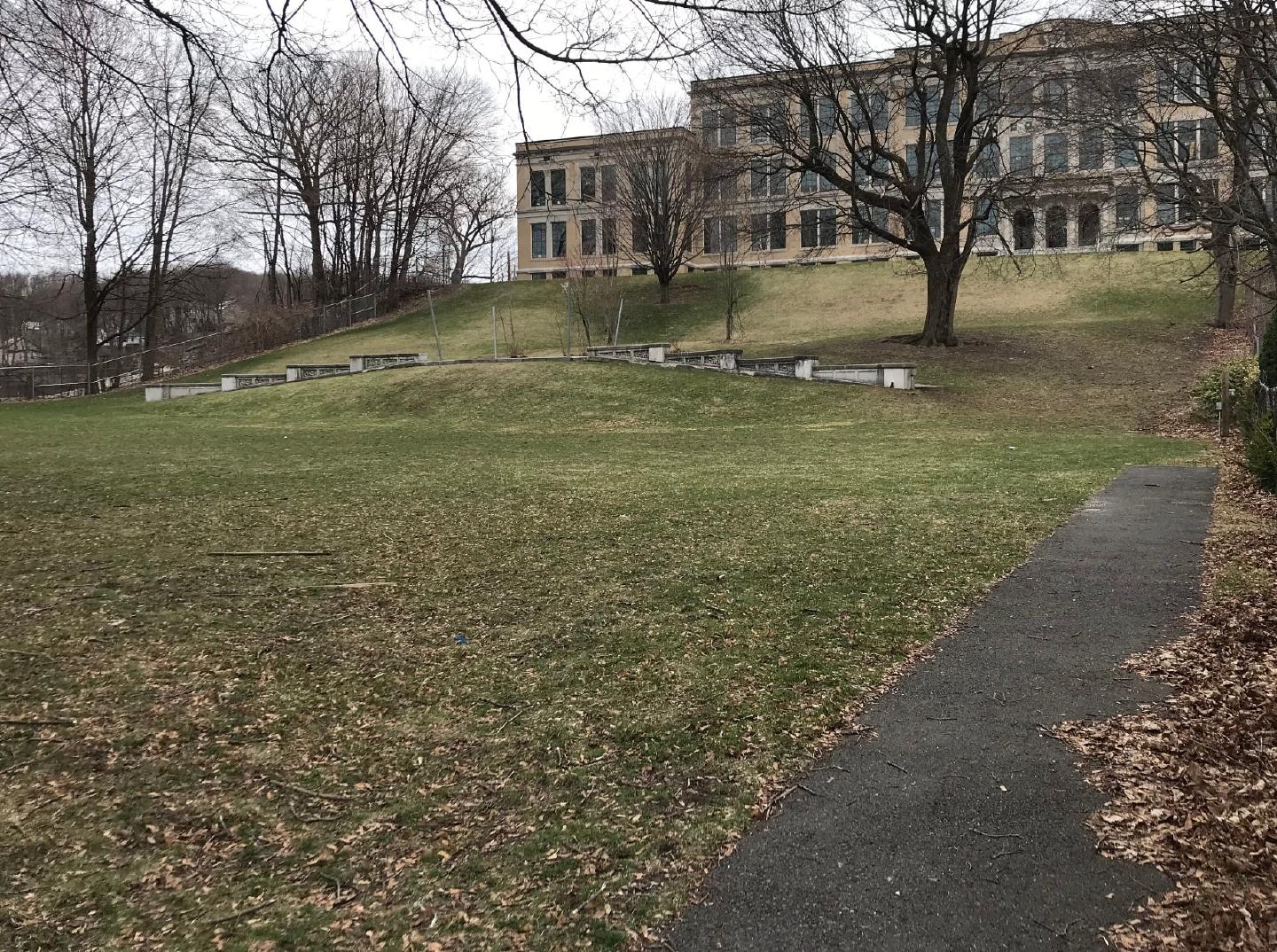
Colegrove Cemetery original location.
Once a small piece of land owned by Jeremiah Colegrove, it then became the location where he was interred. It was later sold as a cemetery to the city of North Adams by his widow. Shortly thereafter the city turned it into the park it now stands as today. | Source: Photo by Michael Boudreau, April 2025.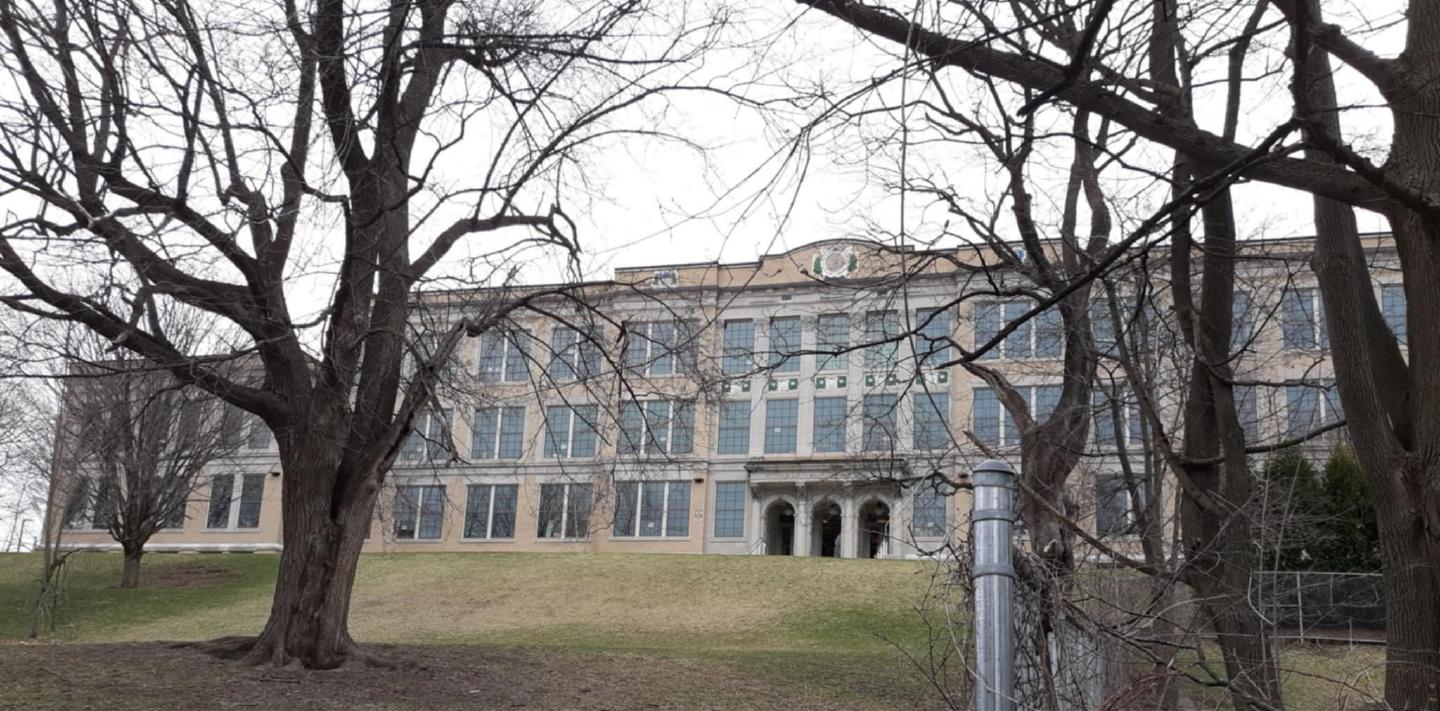
Colegrove Park Elementary School
Colegrove Park Elementary School sits on the hill above a parcel of land Jeremiah Colegrove owned and was later buried in. Now it stands as an active elementary school for the city’s youth, continuing the Jeremiah's legacy. | Source: Photo by Michael Boudreau, April 2025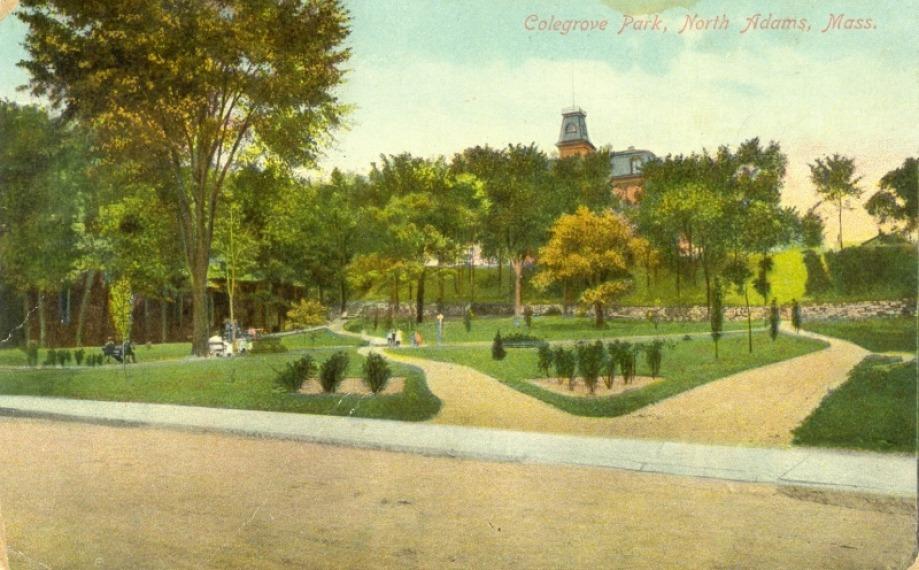
Postcard of Colegrove Park in the early 1900s.
At that time, Colegrove Park was used for family outings, band concerts and outdoor lecture series. | Source: Courtesy of the North Adams Historical Society.