<?xml version="1.0" encoding="UTF-8"?>
<feed xmlns="http://www.w3.org/2005/Atom">
  <title type="text">Historic North Adams</title>
  <updated>2026-04-17T19:40:49+00:00</updated>
  <generator uri="http://framework.zend.com" version="1.12.20">Zend_Feed_Writer</generator>
  <link rel="alternate" type="text/html" href="https://historicnorthadams.com/"/>
  <link rel="self" type="application/atom+xml" href="https://historicnorthadams.com/items/browse?output=rss2"/>
  <id>https://historicnorthadams.com/</id>
  <author>
    <name>Historic North Adams</name>
    <uri>https://historicnorthadams.com</uri>
  </author>
  <link rel="hub" href="https://pubsubhubbub.appspot.com/"/>
  <entry>
    <title type="html"><![CDATA[Weber Brothers]]></title>
    <summary type="html"><![CDATA[<img src="https://historicnorthadams.com/files/fullsize/0dba686d9cb4ceb920bec30d63b0b3bf.jpg" alt="Weber Vault." /><br/><p>The North Adams Shoe Company, also known as the Weber Brothers Shoe Company, was established in 1889. The Weber Brothers consisting of A. C. Weber, William J. Weber, Theodore L. Weber, Emmet C. Weber and Arthur J. Weber were the very capable business men and shoemakers who established this company. Their father before them was also known as a practical shoe maker.
The company first started by taking over the wooden factory owned by W. G. Cady on Holden Street very near the bridge. Later this factory was moved  near the old Sampson factory and a new brick addition built. The demand being so great and business increasing so rapidly it became necessary to double the capacity of the plant by yet another large addition.
From 1889-1892, the Messrs. Weber Bros. had a large jobbing business in shoes from this town and in early May of 1892 began the erection of a warehouse at the corner of Brooklyn street and Bracewell avenue. The warehouse extended 100 feet on Brooklyn street and thirty-four feet on Bracewell avenue and was be three stories in height.
The Weber brothers produced a line that were solid, common sense shoes guaranteed to be the best produced for the money. They instinctively knew what were good and what were bad in shoes and what would meet the public demand and what would not.  Their trade instantly assumed considerable proportions and yearly experienced a large growth.  All shoes sent out by the company were guaranteed to be the best that could be produced for the money, in fact, one line of shoes had printed on its sole. “A Better Shoe Man Never Made”. The company shipped shoes to every major city in the United states.  Many shoe manufacturers tried but failed to copy the Weber shoes, they simply could not produce the same quality for the same money. The Weber Company had the very latest machinery and equipment and were no match for their competitors. The Weber Company enjoyed a very successful business and an excellent reputation.
The firm has conducted its business so modestly and in such a quiet way, that many of the residents of North Adams hardly knew that there was such a business house in this town, yet they handled several hundred thousand dollars worth of the products of the North Adams shoe factories each year. They ship directly to the retail dealers and as they always have one or more representatives of their firm on the ground, they are able to superintend the manufacture of the goods for their trade as well as to take advantage of the market.
One sales tactic was to have their salesmen bring back from the field the latest trends and styles. The Weber Company was always up-to-date and often ahead of other companies in styles and lasts. The shoe trade of the United States generally recognized the fact that if anything new in footwear appeared, the North Adams Company had it.
The main office of the company was in Chicago and they had a branch office in St. Paul but with the completion of the warehouse much of the business was transacted in North Adams which had hitherto been done at other points. During six months of the year at least, the members of the firm were required to make their home in North Adams.
The Weber Brothers also had a retail store at 82 Main Street.  This shoe store was considered to be the finest and most modern shoe store in Western Massachusetts. Its large and comprehensive stock and store fittings and furnishings were strictly modern. It was under the direct management of Mr. E. E. Dutton, one of the most competent shoe men to be found.
The Weber Brothers from such a humble beginning, contributed much toward the support of a large number of workers in the city of North Adams. The Weber Shoe Company was an institution that North Adams could be very proud of, and justly so, for no institution contributed more to its wide reputation as a shoe center.</p><p>Map Coordinates: 42.6755405, -73.0990553
<em>Adapted from a Story by the North Adams Historical Society</em>.</p><p><em><strong><a href="https://historicnorthadams.com/items/show/200">For more (including 7 images) view the original article</a></strong></em></p>]]></summary>
    <published>2025-05-20T04:33:28+00:00</published>
    <updated>2026-04-17T19:40:49+00:00</updated>
    <link rel="alternate" type="text/html" href="https://historicnorthadams.com/items/show/200"/>
    <id>https://historicnorthadams.com/items/show/200</id>
    <author>
      <name>Historic North Adams</name>
    </author>
  </entry>
  <entry>
    <title type="html"><![CDATA[William Henry Johnson]]></title>
    <summary type="html"><![CDATA[<img src="https://historicnorthadams.com/files/fullsize/fc9552cf1a7b4b26c84bcbfc22ab6700.jpg" alt="[Untitled]" /><br/><p><span style="font-size:13.5pt;font-family:Times;color:#000000;">In 1925, the year that William Henry Johnson was first elected as Mayor of North Adams, the City Hall occupied space roughly where the Burger King is located today. A man of frail health when he took office, the new mayor met with the public there on Saturday mornings and occasionally on weekday afternoons. For the most part, he transacted the city’s business from the office of the foundry that he owned.</span>

<p style="word-spacing:0px;"><span style="font-size:13.5pt;font-family:Times;color:#000000;">Mayor Johnson was not a native of North Adams. Born in Copake, N.Y. in 1871 he received his early education there before apprenticing himself as a foundry man--a trade that he worked at throughout his early manhood. Later he moved to Lee where he pursued the trade until the age of 20 when he moved to North Adams to work at the James Hunter Machine Company.</span>

<p style="word-spacing:0px;"><span style="font-size:13.5pt;font-family:Times;color:#000000;">Within a few years, Johnson and the late W. F. Corkum bought the foundry building on Houghton street from William Hodge. The two began a partnership that ended eight years later when Johnson purchased Corkum’s interest and continued the business under his own name. Within a short time, Johnson purchased the adjoining land and buildings north of the foundry as far as the corner of North Street--a few doors from his own home at Number 16 around the corner.</span>

<p style="word-spacing:0px;"><span style="font-size:13.5pt;font-family:Times;color:#000000;">The sickness that began to plague him as a young man continued to the point where he was forced to give up the physically exhausting work in the foundry itself, leaving that aspect of the business to others. He continued the office work in the burgeoning enterprise. An astute business man, he began to acquire other properties throughout the city.</span>

<p style="word-spacing:0px;"><span style="font-size:13.5pt;font-family:Times;color:#000000;">Early on, after settling in North Adams, the young businessman became a member in the fraternal societies which were numerous during that period of time of the ‘Twenties: the Elks, the Eagles and the Moose--in which he held offices. He went through the chairs at the Elks and in 1909 was elected Exalted Ruler, an office that he would attain again in 1925. In appreciation of his work, the Elks voted him a life membership.</span>
<p style="word-spacing:0px;"><span style="font-size:13.5pt;font-family:Times;color:#000000;">Johnson’s activities in these clubs found fertile ground for him when he entered civic politics. He was persuaded to fill the vacancy on the city council in 1920 created by the death of Councilor Alton J. Hurd, proprietor of the jewelry store on Main Street. When this term expired, Johnson ran for the Council in 1921 and was elected with the endorsement of both the Republicans and Democrats. A Republican, he served three years.</span>
<p style="word-spacing:0px;"><span style="font-size:13.5pt;font-family:Times;color:#000000;">In 1924, Johnson was persuaded by a powerful local group to run for Mayor against Edward S. Wilkinson who earlier in the century had been the city’s third mayor. Wilkinson’s political support was negligible and Johnson carried six of the seven wards with a plurality of 787 votes. In 1926 Johnson stood for re-election against Nelson S. McCraw, Republican, and Attorney Bernard J. Boland, Independent. His plurality over McGraw was 845 votes. In 1928, running against former representative James T. Welch and Dr. Wallace E. Brown, he rolled up a plurality of 1710 votes and the largest that he would ever attain as a mayoralty candidate. However, in 1930 his popularity with the voters was on the wane. He defeated John Morrissey by only 75 votes in retaining the office.</span>
<p style="word-spacing:0px;"><span style="font-size:13.5pt;font-family:Times;color:#000000;">In 1932, popular druggist, Archie Pratt, a partner of Edward Rice at Rice’s Drug Store, opposed Mayor Johnson and gained one of the biggest upsets in the political history of the city by a plurality of 788 votes--setting off a boisterous celebration downtown on election night.</span>
<p style="word-spacing:0px;"><span style="font-size:13.5pt;font-family:Times;color:#000000;">In 1934, at the end of a lackluster administration, Mayor Pratt found himself facing Johnson again and this time he wasn’t as lucky as Johnson defeated him and former assessor and funeral director, Walter F. Pringle, by a total of 1313 votes.</span>
<p style="word-spacing:0px;"><span style="font-size:13.5pt;font-family:Times;color:#000000;">Johnson, seeking his seventh term, lost to Dr. Francis J. O’Hara in 1936, squeezed out by 67 votes. Again, in 1938, the two opposed each other and this time Mayor O’Hara raised the plurality by 1100 votes. Never again, with his health steadily declining, could he be induced to seek public office. People who had been steadfast in their support of Johnson, turned their backing to one of his most vocal critics, Faxon Bowen, in 1940.</span>
<p style="word-spacing:0px;"><span style="font-size:13.5pt;font-family:Times;color:#000000;">Mayor Johnson had based his campaigns on a platform of rigid economy. Nevertheless, he managed to pave River Street, Hospital Avenue, portions of Eagle and Main Streets, West Main Street as far as Brown Street and part of Union Street on the approach to the Mohawk Trail. New resurfacing took place on Church and Franklin Streets and he reconstructed all of the city’s downtown bridges except Eagle Street’s. He extended sewer and water lines as well as sidewalks throughout the city.</span>
<p style="word-spacing:0px;"><span style="font-size:13.5pt;font-family:Times;color:#000000;">Mayor Johnson was not without his critics. He had many. His choice of people for his cabinet came under fire. He was accused of corruption. When he finally left office--following his decision to give up politics--there was an almost complete turnover of officials at City Hall. Only Michael W. Conlon, Chief of Police and Fire Chief John E. Saulnier retained their jobs.</span>
<p style="word-spacing:0px;"><span style="font-size:13.5pt;font-family:Times;color:#000000;">Death came to the 71-year old William Johnson on Wednesday afternoon, May 17, 1941 ending the protracted illness from which he suffered. His funeral was on the following Sunday afternoon in the St. John’s Episcopal Church with the Reverend William Crittenden officiating. Across the street the nation’s flag flew at half-mast on orders from Mayor Faxon Bowen; his friend, antagonist and political opponent.</p><p>Map Coordinates: 42.6731110, -73.1002157</span>
<em>Adapted from the original article for the North Adams Historical Society.</em></p><p><em><strong><a href="https://historicnorthadams.com/items/show/192">For more (including 4 images) view the original article</a></strong></em></p>]]></summary>
    <published>2025-05-05T04:44:48+00:00</published>
    <updated>2026-04-17T19:40:48+00:00</updated>
    <link rel="alternate" type="text/html" href="https://historicnorthadams.com/items/show/192"/>
    <id>https://historicnorthadams.com/items/show/192</id>
    <author>
      <name>Historic North Adams</name>
    </author>
  </entry>
  <entry>
    <title type="html"><![CDATA[Faxon Bowen : North Adams Mayor, 1941-1943.]]></title>
    <summary type="html"><![CDATA[<img src="https://historicnorthadams.com/files/fullsize/aa63b7fb113da7fc0dc9a8f6e1879245.jpg" alt="[Untitled]" /><br/><p>Faxon Bowen was born in Readsboro, VT on May 11, 1876. His father was for many years a judge of the Bennington County Court. He went to school in Readsboro through the eighth grade, and then attended the Bennington High School for two years; he completed his education at the Greenwich (NY) High School.
In 1925 he came to live in North Adams with his mother and sister. Bowen first came to the attention of the people of North Adams through a series of letters he wrote to The Transcript on local affairs. For many years he write to The Transcript signing his letters “The Black Hound,” after a pet that had been his companion for years.
Bowen was elected to the North Adams City Council in 1929, and was re-elected in 1932. He resigned in 1935 to take a government position in the Civilian Conservation Corps, (CCC) in Sandisfield, but in 1936 he left the CCC and returned to North Adams. After his return, he ran for state representative, losing that race to Joseph N. Roach. In 1938, he was elected once more to the City Council; again, he resigned in 1940, this time with the intention to run for mayor.
Running on an independent ticket and a platform of ridding city government of corruption, he announced his candidacy only three weeks before the election. Being a carpenter, he had the support of all the laborers in this city, and was endorsed by the Carpenter’s Union, the Bricklayer’s Union, and the Painter’s Union. His opponent - Dr. Francis J. O’Hara - was supported by the mill owners and wealthy businessmen, many of whom he had made wealthier, allegedly through corrupt deals with the city. But in the end, it was O’Hara’s overconfidence that won Bowen the election. Seeing no real competition in him, O’Hara did not bother to campaign until shortly before the election, when he wrote a letter to <em>The Transcript</em> denouncing Bowen as “...a common laborer.” O’Hara’s supporters deserted him at that point. It was the first time in North Adams history that a laborer was elected to the mayor’s office.
Once taking office, Bowen’s first action was to appoint himself commissioner of Public Works, as this department was most in need of cleaning up. He was known to spend an average of 15 hours a day in the office. Bowen was a strictly honest man, who put the good of the city first, often making impulsive decisions, such as having things repaired and putting in the request for the money later. He fired corrupt administrators, and became famous for his scuffles with the City Council.
Bowen was unsuccessful in his next two bids for re-election, and finally ended his political career. In 1950, he moved with his wife to Pownal, VT, where he lived for 21 years until his death in 1971 at the age of 95.</p><p><em>*This is not actually Faxon Bowen's gravesite. He had originally planned to be buried in Southview Cemetery with his first wife. He later moved to Pownal, VT and is buried there.*</em></p><p>Map Coordinates: 42.6749859, -73.0981588</p><p><em>Adapted from a story by the North Adams Historical Society</em>.</p><p><em><strong><a href="https://historicnorthadams.com/items/show/191">For more (including 5 images) view the original article</a></strong></em></p>]]></summary>
    <published>2025-05-05T04:44:34+00:00</published>
    <updated>2026-04-17T19:40:48+00:00</updated>
    <link rel="alternate" type="text/html" href="https://historicnorthadams.com/items/show/191"/>
    <id>https://historicnorthadams.com/items/show/191</id>
    <author>
      <name>North Adams Historical Society</name>
    </author>
  </entry>
  <entry>
    <title type="html"><![CDATA[H. Torrey Cady: Hiram Torrey Cady: A Life of Civic Duty and Enterprise]]></title>
    <summary type="html"><![CDATA[<img src="https://historicnorthadams.com/files/fullsize/c2ce89d8a2867c15fe50093f22bd8291.jpg" alt="Cady gravestone. " /><br/><p>Hiram Torrey Cady was a prominent figure in late 19th and early 20th-century Massachusetts, known for his contributions to both the industrial and political landscapes of the region. Born on January 17, 1843, in the industrial town of North Adams, Massachusetts, Cady would go on to become a respected manufacturer and dedicated public servant, shaping the development of his hometown during a time of growth and transformation.</p><p>Cady began his career in manufacturing, a key industry in North Adams, which was rapidly evolving in the post-Civil War period. His work in this field not only contributed to the economic life of the town but also laid the foundation for his later public service. Like many civic-minded individuals of his era, Cady believed in improving his community through both business leadership and political engagement.</p><p>His first major step into politics came in 1890, when he was elected to represent North Adams in the Massachusetts House of Representatives. There, he demonstrated a commitment to practical governance and an understanding of the needs of his industrial constituency. The following year, in 1891, he continued his public service by serving in the Massachusetts State Senate. His tenure in both legislative bodies underscored his dedication to public service and earned him a reputation as a capable and fair-minded politician.</p><p>In 1898, Cady was elected as the second mayor of North Adams. Initially a Democrat, he later aligned with the Republican Party during his time in office, reflecting both the shifting political tides of the time and his pragmatic approach to governance. He served as mayor until 1900, presiding over a time of civic and industrial growth in the city. His leadership was marked by efforts to modernize the town’s infrastructure and support public institutions. Cady’s time as mayor also coincided with the expansion of municipal services, reflecting broader Progressive Era trends aimed at improving urban living conditions.</p><p>Beyond his political career, Cady was also known for his philanthropy and involvement in the community. One example of his civic engagement was his donation of a stained-glass window to the First Congregational Church in North Adams in 1909. This act of generosity not only reflected his personal faith and values but also his lasting commitment to improve the cultural and spiritual life of the town.</p><p>Torrey Cady passed away on January 8, 1917, in Hartford, Connecticut, just shy of his 74th birthday. Though he spent his final days outside of Massachusetts, his legacy remains deeply tied to North Adams, where his contributions to public life and local industry helped shape the town's identity during a developing period in its history.</p><p>Hiram Torrey Cady exemplified the ideal of the civic-minded industrialist—a figure whose efforts in both the private and public spheres left a lasting mark on his community. His life serves as a reminder of the important role local leaders play in shaping the places they call home.</p><p><em><strong><a href="https://historicnorthadams.com/items/show/185">For more (including 6 images) view the original article</a></strong></em></p>]]></summary>
    <published>2025-04-22T17:15:53+00:00</published>
    <updated>2026-04-17T19:40:48+00:00</updated>
    <link rel="alternate" type="text/html" href="https://historicnorthadams.com/items/show/185"/>
    <id>https://historicnorthadams.com/items/show/185</id>
    <author>
      <name>Michael Cellana</name>
    </author>
  </entry>
  <entry>
    <title type="html"><![CDATA[Children’s Memorial Garden]]></title>
    <summary type="html"><![CDATA[<p><strong><em>"A parent's worst fear is losing a child, and should you lose a child, the biggest fear becomes that the child will be forgotten." Donna Morgan, 2007.</em></strong></p><img src="https://historicnorthadams.com/files/fullsize/057f871a09ad849a01fc7e85b74400eb.jpg" alt="Angel of Hope Statue." /><br/><p>Donna Morgan lost her only daughter Diana, when she was just 19 years old. At the time of her death Diana had been enrolled in Marist College in Poughkeepsie N.Y. She graduated from Hoosac Valley High School and had dreams which included fashion design. Donna made it her project when she retired from teaching to create this tranquil place in memory of her daughter and all of the angels that came before her and would come after her. </p><p>The garden would include The Christmas Box Angel Statue, which cost $14,000. The Christmas Box Angel statue was introduced to the world in the book The Christmas Box, a worldwide bestseller and hit television movie by author Richard Paul Evans. In the book, a woman mourns the loss of her child at the base of an angel monument. Though the story is mostly fiction, the angel monument once existed but is speculated to have been destroyed. The new angel statue was commissioned by Richard Paul Evans, in response to reports that grieving parents were seeking out the angel as a place to grieve and heal. </p><p>The monument was dedicated on December 6, 1994 -corresponding with the date of the child’s death in The Christmas Box. </p><p>Coincidentally, Dec.ember 6th is celebrated in many parts of the world as Children’s Day. There is also an annual candlelight vigil at Southview Cemetery held on this date. </p><p>Donna Morgan wanted the garden to be accessible to all families who wanted to memorialize their loved one, so she continues plans to raise extra funds for families who couldn’t afford a paver. Currently there are empty pavers available, and burial at Southview Cemetery isn’t required to purchase a paver.</p><p><em><strong><a href="https://historicnorthadams.com/items/show/181">For more (including 7 images) view the original article</a></strong></em></p>]]></summary>
    <published>2025-04-22T04:38:07+00:00</published>
    <updated>2026-04-17T19:40:48+00:00</updated>
    <link rel="alternate" type="text/html" href="https://historicnorthadams.com/items/show/181"/>
    <id>https://historicnorthadams.com/items/show/181</id>
    <author>
      <name>Erin Strek</name>
    </author>
  </entry>
  <entry>
    <title type="html"><![CDATA[Anna Helen Croft McCuen]]></title>
    <summary type="html"><![CDATA[<p><strong><em>Anna Helen Croft McCuen was a woman born in North Adams in 1889, where she grew up and then studied at the North Adams Normal School to be a special class teacher, teaching first at Brayton School then teaching 1st grade at Haskins School for 20 years. Her claim to fame, however, is a collaboration she had with renowned author H.P. Lovecraft for the short story “Poetry and the Gods.”</em></strong></p><img src="https://historicnorthadams.com/files/fullsize/e3bedc7e17b4510d91213550b40dd944.jpg" alt="Anna Helen Crofts McCuren tombstone." /><br/><p>Born to parents Dr. Nicholas M. and Julia Crofts, Anna began her life in North Adams, Massachusetts in 1889. She lived and grew up in the city and went to the local schools until graduating from Drury High School in 1909. During her early life she found a passion for teaching and the study and creation of literature. She went on to attend the local teachers school, the North Adams Normal School, which today resides on the MCLA campus, where she graduated as a special class teacher in 1919. Quotes and records from her yearbook state she was a sincere and beloved student and classmate.
After this she built up her education further with continued classes at Hyannis State College, she then returned to North Adams and taught in the local school systems. From 1922 to 1924 she taught as a special class teacher at the Brayton School before transferring to Haskins School and spending her entire tenure there teaching first grade from 1924 to 1942. During these years she married Joseph McCuen and moved to next door Williamstown where her husband ran a local restaurant as well as a package store before passing away in 1963. She would stay in Williams Town as a retiree and member of various groups such as the St. Patrick’s Church and the National Retired Teachers Association before passing away in 1975 at age 85. Anna was buried in Southview Cemetery in North Adams.
This is how most people and the few left behind cousins would remember her, as a teacher and beloved member of the community. She had even been known to travel in her later widowed years moving to “exotic locations” as the newspaper the <em>Berkshire Eagle</em> wrote. However, back in 1920 shortly after graduating from the Normal School, Anna would write in collaboration with the soon to be famous author H.P. Lovecraft in the <em>United Amateur</em>.
How this collaboration actually came about is not truly known, with some speculation being they met through a mutual literary friend or Lovecraft simply finding and admiring her work but together they wrote and edited “Poetry and the Gods” a short story about a woman whisked away to meet with the ancient Hellenistic Deities and promised that she would lead an important figure into the future. This short story won an award, but Anna kept very quiet about all her literary works and not very many people knew about her writing in the first place. However, Anna truly did write the short story but included a poem called “Sky Lotus” by Elizabeth Jane Coatsworth without credit, while this was certainly not intentional plagiarism it does need to be stated
Her unwillingness to identify herself publicly led to an obscurity which led Lovecroft scholars to speculate on whether this Anna H. Crofts was a real woman to begin with and not a fake name for Lovecraft himself or another author. Unknown during her life, she is now recognized as part of a larger literary legacy.</p><p><em><strong><a href="https://historicnorthadams.com/items/show/180">For more (including 7 images) view the original article</a></strong></em></p>]]></summary>
    <published>2025-04-22T04:13:59+00:00</published>
    <updated>2026-04-17T19:40:48+00:00</updated>
    <link rel="alternate" type="text/html" href="https://historicnorthadams.com/items/show/180"/>
    <id>https://historicnorthadams.com/items/show/180</id>
    <author>
      <name>Trevor Gardner</name>
    </author>
  </entry>
  <entry>
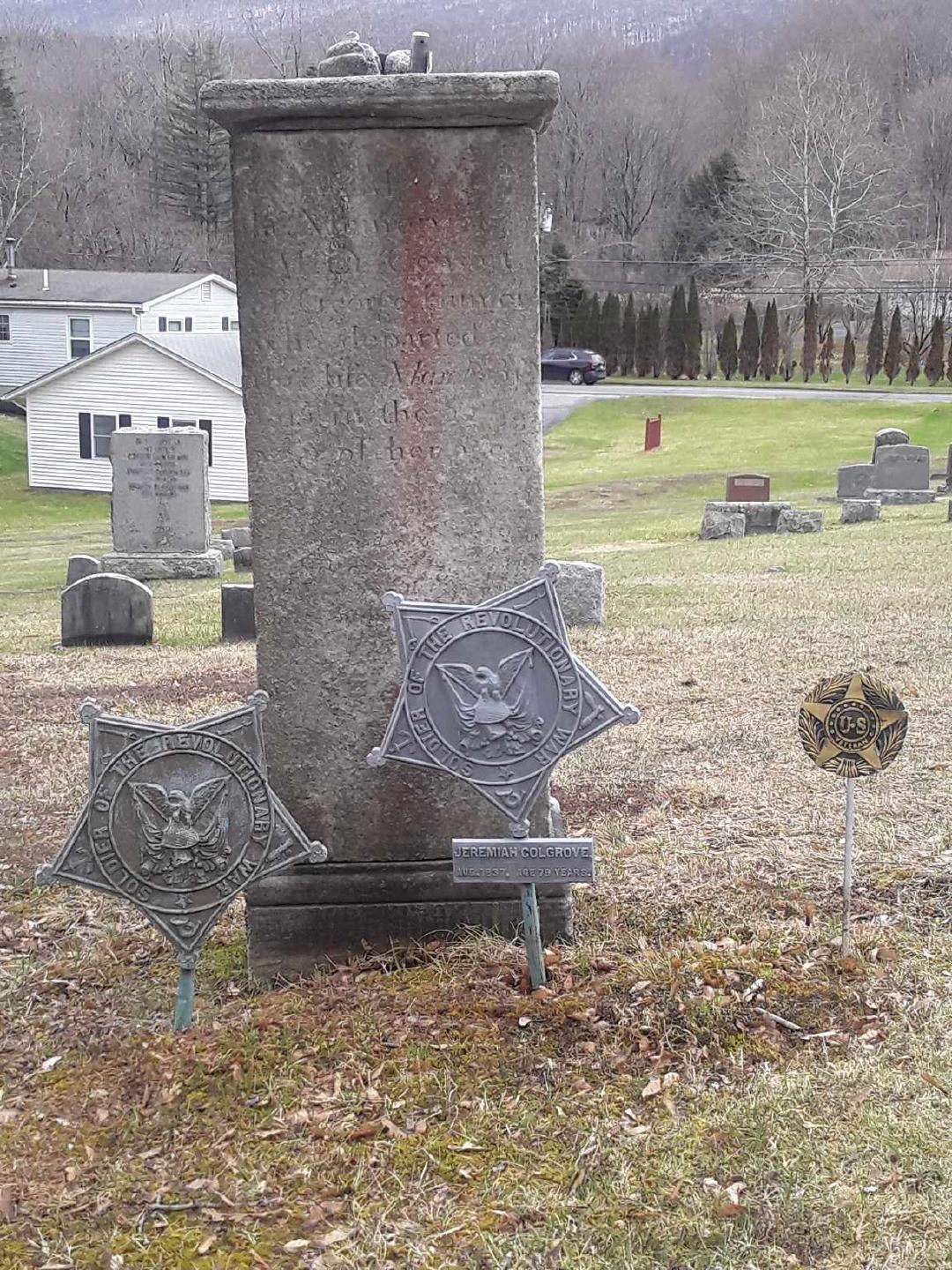
    <title type="html"><![CDATA[Jeremiah Colegrove]]></title>
    <summary type="html"><![CDATA[<p><strong><em>Fleeing capture around 1802, a fugitive slave woman found herself cornered until one man, at great personal risk, took her in and hid her from those who sought to return her to bondage. That man was Jeremiah Colegrove, one of the first industrialists in North Adams and a figure of immense moral conviction and personal strength.</em></strong></p><img src="https://historicnorthadams.com/files/fullsize/97763f5aa483ce47580ed4306c1ae9d1.jpg" alt="Jeremiah Colegrove&#039;s gravestone." /><br/><p>Born in Rhode Island in 1758, Jeremiah Colegrove came of age during the American Revolution. Drafted at 21, he served for several years, mostly as an armorer and gunsmith, sharpening the skills that would serve him in peacetime. After a brief stint in Charlton, he traveled to North Adams in 1793 and was captivated by the raw power of the Hoosic River. He moved there permanently in the next year, when the village had fewer than a dozen homes.
Colegrove quickly became a major landowner and one of the key founders of North Adams’ industrial base. In 1794, with help from his brother-in-law Elisha Brown, he purchased a dilapidated saw and grist mill from Giles Barnes, along with 80 acres of surrounding land. Though he never operated the original grist mill, he ran the sawmill briefly to produce lumber for the construction of new mills. In 1795, he built a dam—later known as the Phoenix Dam—and a new grist mill. Around 1800, he added an oil mill, which was later converted into another grist mill before burning down in 1854.
His mills brought work and economic development to the area. By the early 1800s, Colegrove operated a grist mill, flaxseed processing plant, and blacksmith shop, all powered by the dam he constructed. He also used Eagle Street—then his private road—to haul lumber, later donating it as a public highway. His leadership helped turn North Adams from a sparse riverside village into a bustling industrial town.
Colegrove was more than just a businessman. His moral compass was unshakable, and his sense of justice never wavered. The story of him sheltering a fugitive slave woman isn’t just a dramatic footnote—it’s a testament to the kind of man he was. Though a Federalist in a staunchly Democratic town, his honesty and wisdom earned him widespread respect. Even political rivals turned to him in times of crisis, trusting his judgment above their own partisans. He served more than 20 years as a justice of the peace, though his political views likely kept him from higher office. He was not a churchgoer, but he lived a life of deep moral integrity. Tall and athletic, with “nerves of steel,” Colegrove didn’t seem to understand fear. He led by example, never asking his workers to do more than he would himself.
Jeremiah Colegrove died on August 26, 1837, at the age of 79. He was originally buried on a piece of land he owned in what is now downtown North Adams. His widow, Lydia Colegrove (née Waterman), later deeded the land to the First Baptist Church with the stipulation that it be used as a cemetery—what became known as the Old Colegrove Cemetery or the North Church Street Cemetery. Around 1905, the city purchased the property and transformed it into a public park with a bandstand. Colegrove’s remains were respectfully relocated to Southview Cemetery, where they rest today, while the park and nearby Colegrove Park Elementary School remain a living memorial to his impact on the city he helped build</p><p><em><strong><a href="https://historicnorthadams.com/items/show/178">For more (including 6 images) view the original article</a></strong></em></p>]]></summary>
    <published>2025-04-17T20:47:23+00:00</published>
    <updated>2026-04-17T19:40:48+00:00</updated>
    <link rel="alternate" type="text/html" href="https://historicnorthadams.com/items/show/178"/>
    <id>https://historicnorthadams.com/items/show/178</id>
    <author>
      <name>Michael Boudreau</name>
    </author>
  </entry>
  <entry>
    <title type="html"><![CDATA[George Hadley -- &quot;The Father of the Overpass&quot;]]></title>
    <summary type="html"><![CDATA[<p><strong><em>George Hadley was the key backer for building the overpass that now bears his name.</em></strong></p><img src="https://historicnorthadams.com/files/fullsize/b0c3cb176d921b2c8924a56cdd6872be.jpg" alt="[Untitled]" /><br/><p>Born in 1878 in Nyack, NY, he moved with his parents at age 6 to North Adams where his mother had roots. She was Ellen (Cady) Hadley, a member of one of the city’s oldest and most prominent families in town. His father was John C. Hadley.
In 1897, Clarence, as he was called by nearly everyone who knew him, graduated from Drury Academy, then attended Cornell University for 2 years, returning home in 1899 to begin work for the James Hunter Machine Company. Shortly after, he was transferred to the machine shop where he later became foreman, and in later years, purchasing agent, assistant treasurer and finally treasurer for the remainder of his career which spanned 46 years.
George Hadley and Christine Birch were married on December 16, 1908. They had two sons, George C. Hadley, Jr. and James B. Hadley. George Jr. served in the Navy and James in the US Army.
It was in service to his city that Mr. Hadley is remembered today. He showed a keen interest in public affairs and as a young man he served on the city council. A man of vision and determination, he was an early advocate of the orderly planning and development of the city and waged almost a lifelong fight against haphazard municipal government.
Mr. Hadley lived long enough to see one of his dreams for the city carried out; the overpass which bears his name. Opened to traffic on August 22, 1941, the 4 men who went to Boston to set the project in motion, Mayor Francis O’Hara, City Engineer Irving H. Call, George C. Hadley, secretary of the planning board and James E. Wall, president of the Wall-Streeter Shoe Company, rode in the first car driven across it. Dedication took place a month later with a parade and celebration on September 28th. It was by unanimous vote of the dedication committee that the overpass be names for George Clarence Hadley who is still regarded as the “father” of the project.
Not all projects contemplated by the Planning Board during the Hadley era were carried out during that time, but they bore fruit in later years when the city built its new central fire station and an up-to-date athletic field on State Street. A new school planned for the Blackinton section was later built in Braytonville.
Mr. Hadley was also vice-president and finance committee chairman of the old YMCA on Summer Street.
Always interested in local engineering, Mr. Hadley began in the 1930’s making what became known as the “Hadley Topographical Map”. Traveling to Babson Institute to obtain maps of the Berkshires he was able to use them to construct his cardboard and wooden design. Some of this work was done at home but the final map was put together on the 3rd floor of the James Hunter Machine Company. 
The map traveled to many locations in the Berkshires including the original City Hall, the North Adams Public Library, the Berkshire Museum in Pittsfield and the Adams Historical Society. The existence of the map was brought to the attention of the North Adams Historical Society by Mr. Hadley’s son James who wished this fine piece of history permanently displayed for the education and enjoyment of all people.
Donated to the North Adams Historical Society through the generosity of the Adams Historical Society, the “Hadley Topographical Map” remains in the North Adams Historical Society’s archive.
George C. Hadley died at his home at 83 Hall Street on Monday afternoon, September 10, 1945. On the afternoon of his funeral, September 12th, his body lay in state in the First Universalist Church where he was a member. The James Hunter Machine Company closed for the afternoon so that its employees could attend the funeral.
<em>Adapted from a story for the North Adams Historical Society</em>.</p><p><em><strong><a href="https://historicnorthadams.com/items/show/166">For more (including 3 images) view the original article</a></strong></em></p>]]></summary>
    <published>2023-08-18T14:32:51+00:00</published>
    <updated>2026-04-17T19:40:48+00:00</updated>
    <link rel="alternate" type="text/html" href="https://historicnorthadams.com/items/show/166"/>
    <id>https://historicnorthadams.com/items/show/166</id>
    <author>
      <name>Roger Rivers&amp;#32;&amp;amp;&amp;#32;Lorraine B. Maloney</name>
    </author>
  </entry>
</feed>